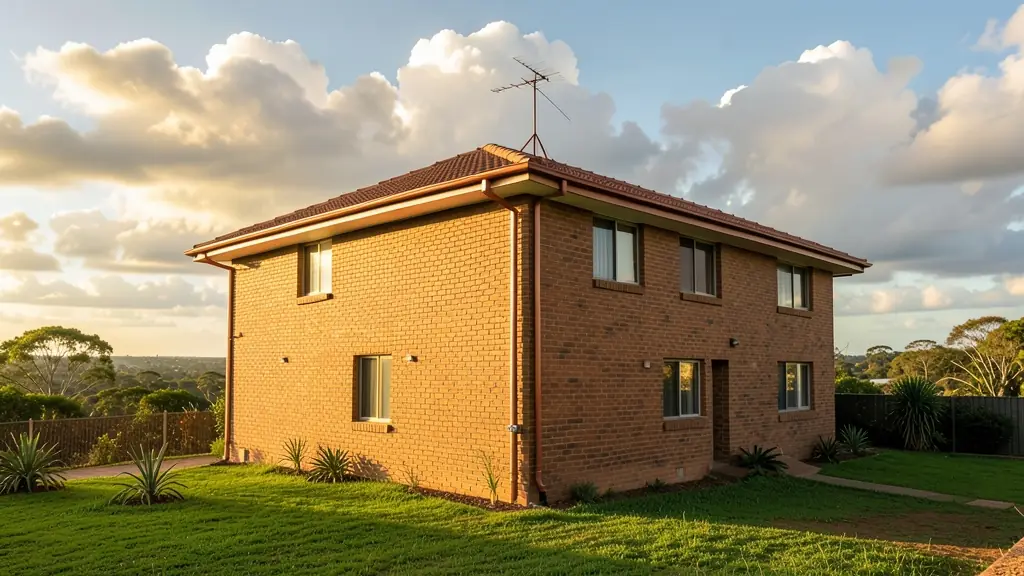
Lightning protection is a planned path for a strike: something on or beside the roof to catch it, conductors to carry the current down the outside of the building, and an earth to spread it into the ground. Inside, bonding and surge devices stop the same strike from jumping through your wiring. Parts of South Africa see some of the highest lightning activity in the world, especially the Highveld and the KwaZulu-Natal interior. This page explains how a system works, who needs one and how installers quote.
External and internal: the two halves of a system
An external lightning protection system (LPS) has three parts. The air termination is the rods, masts, catenary wires or roof mesh the strike attaches to (see lightning rods). Down conductors run by short, straight routes down the outside walls. The earth termination, spikes, a ring conductor or both, spreads the current into the soil.
The internal system is equipotential bonding of metal pipes, frames and services, plus surge protection on power, data, TV and phone lines. A strike on a power line or a nearby tree can wreck a gate motor and router without touching the house, so most buildings need both halves.
Who needs one, and SANS 62305
The South African standard is SANS 62305, the local adoption of IEC 62305, used together with SANS 10313. Part 2 is a risk assessment: it weighs how often lightning strikes the area, the building's size and position, who is inside, what it contains and which services come in, then says whether protection is needed and at what level. A lightning risk assessment is normal for schools, hospitals, estates, factories and fuel sites.
For houses, the usual triggers are thatch, a hilltop or ridge position, tall trees, an isolated farmhouse, or an insurer who asks for a certificate.
Protection levels and materials
The standard has four lightning protection levels, LPL I (the strictest) to IV. The level sets the design: a rolling sphere radius of 20 m for class I up to 60 m for class IV, a roof mesh from 5 x 5 m to 20 x 20 m, and down conductors typically every 10 to 20 m, with at least two on any building.
Common materials are 25 x 3 mm copper tape, 8 mm round copper or aluminium, and galvanised or stainless steel. Copper and aluminium must not touch directly. Copper theft is common, so ask about aluminium, steel or lockable test boxes. Thatch needs an isolated system: see thatch roof lightning protection.
Certificates, and how installers quote
A finished system should be tested for continuity and earth resistance and handed over with a certificate. Many installers belong to ELPA, the Earthing and Lightning Protection Association, which runs training and accreditation, so ask about it. Surge devices wired into your DB board must be fitted by a registered electrician who issues a CoC.
Price depends on the building's size and height, the roof (tile, IBR, flat concrete or thatch), how many down conductors and earth electrodes are needed, the soil, the materials and travel. Expect a site visit before a firm quote, and plan regular inspections once the system is in.
What to put in your request
- Building type, size and height in metres
- Roof type: tile, IBR, concrete or thatch
- Whether there is an existing system or surge devices
- Why you need it: insurer, new build or a recent strike
- Your suburb or town, and access for a site visit
Lightning Protection for homes, thatch, estates, farms and industry
- Homeowners: protects a house on a ridge or among tall trees from fire, cracked walls and fried electronics
- Thatched homes and lapas: isolated masts or a catenary wire keep the strike off the roof so it cannot ignite the grass
- Estates and body corporates: covers a clubhouse, guardhouse and common buildings, with surge protection on gates and cameras
- Offices, schools, churches and clinics: a designed system for schools, churches, offices and clinics, based on a risk assessment
- Mines, plants, tanks and towers: engineered protection for tanks, plants and towers, with bonding and surge devices on control lines
- Farms and smallholdings: protects the farmhouse, sheds and borehole pumps on open ground where storms hit hard
- Lodges, guest houses and venues: keeps thatched chalets, the main lodge and the boma safer through the summer storm season
- Solar PV owners and installers: air terminals and surge devices protect the panels, inverter and batteries from strikes and surges
- Builders, engineers and electricians: a system specified at design stage, with conductors and earths placed before finishes go on
Frequently asked questions
Do you install lightning protection yourselves?
No. We are a free quote request service. You send one request and we pass it to independent lightning protection installers, earthing contractors and registered electricians who work in your area. They quote you directly and you decide who to use.
Does a lightning protection system make my building strike proof?
No system does that. It gives the strike a controlled path to earth, so it is far less likely to start a fire, crack masonry or flash over through the wiring. It reduces risk; it does not remove it. It also does nothing for someone standing outside in the open.
Is surge protection enough on its own?
For a brick-and-tile house in a suburb, a risk assessment often points to surge protection at the board plus plug-level devices. A direct strike on the roof needs an external system. For thatch, exposed sites and larger buildings, plan for both. See home lightning protection.
What should I do when a storm comes over?
Go indoors or into a closed, metal-roofed car when you hear thunder, and stay there until about 30 minutes after the last thunder, a common rule. Avoid baths, showers and corded equipment, keep away from masts and down conductors, and never go onto a roof while a storm is near.
Lightning Protection by province and city
- Johannesburg
- Pretoria
- Centurion
- Midrand
- Sandton
- Randburg
- Roodepoort
- Krugersdorp
- Randfontein
- Germiston
- Boksburg
- Benoni
- Kempton Park
- Alberton
- Vanderbijlpark
- Vereeniging
- Durban
- Pinetown
- Pietermaritzburg
- Richards Bay
- Newcastle
- Ladysmith
- Gqeberha (Port Elizabeth)
- East London
- Kariega (Uitenhage)
- Mthatha
- Cape Town
- Bellville
- Paarl
- Stellenbosch
- George
- Worcester
- eMalahleni (Witbank)
- Middelburg
- Secunda
- Mbombela (Nelspruit)
- Rustenburg
- Brits
- Klerksdorp
- Potchefstroom
- Mahikeng
- Polokwane
- Tzaneen
- Kimberley
- Upington
- Bloemfontein
- Welkom
- Sasolburg