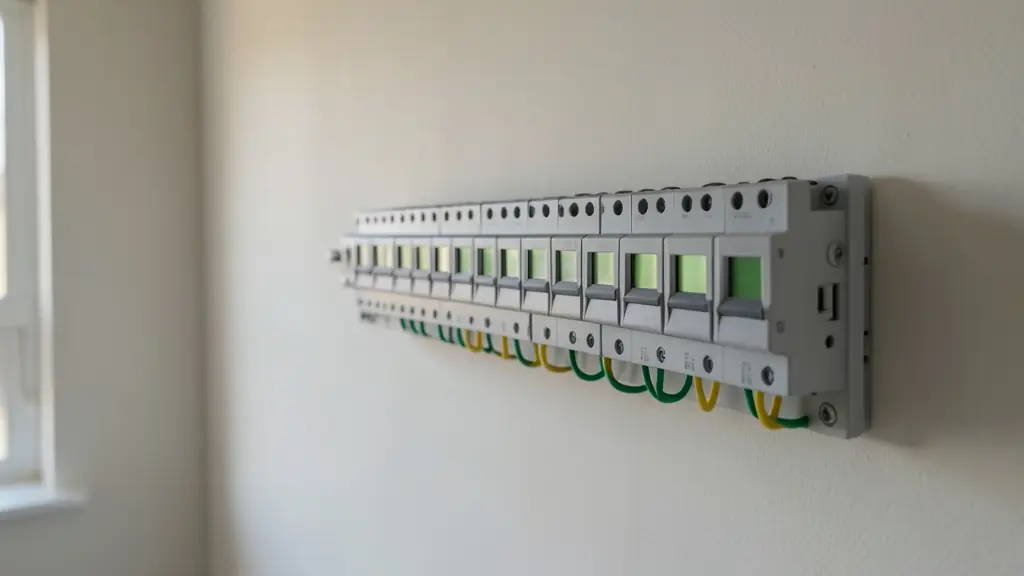
Surge protection stops a short spike of voltage from reaching the equipment in your home or business. In a South African summer that spike usually comes from lightning: a strike on the overhead line, a tree down the road or the ground near your borehole can push thousands of volts into the wiring in a fraction of a second. Switching on the grid and load shedding add smaller surges all year. This page explains the devices, where they go and what a sensible setup looks like. Send one request and independent electricians and suppliers in your area quote you directly.
Where surges come from
Lightning does not have to hit your roof to do damage. A strike nearby induces a surge in the supply cable, the TV aerial lead, the phone or fibre-to-copper line, the gate motor cable and the long run to a borehole pump. That is why a whole street can lose routers and alarm panels in one storm. Switching on the network, faults and power returning after load shedding also produce surges, though in summer the worst damage is often from lightning.
If your building has, or needs, an external system on the roof, start with lightning protection: surge devices protect the wiring, not the structure.
Types 1, 2 and 3
Surge protective devices (SPDs) are graded by where they sit and what they can take:
- Type 1: tested with a lightning current wave, fitted at the main board where there is an external lightning protection system or an overhead supply line.
- Type 2: the common device in distribution boards, for induced surges.
- Type 3: close to sensitive equipment, such as surge protection plugs and multi plugs.
Combined Type 1+2 devices are a common choice for a home main board. See surge arresters for ratings.
Coordinated protection, not one gadget
The setup that works is layered. The board device takes the bulk of the energy, plug-level devices catch what is left close to the TV, PC or fridge, and every incoming line gets its own protection: data, aerial, intercom, gate motor and pump. All of it depends on a sound earth, so ask the electrician to check yours and look at earthing materials if bonding is missing. Homes with panels need DC surge protection on the solar side as well.
After a strike
An SPD sacrifices itself. Many have a window that turns red when the device has worn out, and some trip a backup breaker. After a big storm, check the board: a spent device protects nothing until it is replaced. Compare that small cost with replacing a gate motor board, an inverter or a fridge compressor, and the case for protection is usually easy to make.
When you ask for quotes, list everything that failed in past storms and every cable that enters the property. A good electrician will look at the supply, the board and the earth before recommending devices, rather than selling the same module to every house. If your insurer asks what protection is installed after a claim, the certificate of compliance and the device ratings are the answer.
What to put in your request
- Single phase or three phase supply, and overhead or underground
- Whether the building has an external lightning conductor
- What has been damaged before: gate motor, router, TV, pump
- Other lines coming in: fibre, aerial, intercom, borehole
- Whether you have solar panels, an inverter or batteries
Surge Protection for homes, thatch, estates, farms and industry
- Homeowners: a board device plus plugs for the TV, router, fridge and gate motor
- Thatched homes and lapas: Type 1 devices at the main board where a mast system protects the roof
- Estates and body corporates: board devices for the clubhouse, gatehouse, booms and shared pumps
- Offices, schools, churches and clinics: devices in the main and sub-boards plus data line protection for the server
- Mines, plants, tanks and towers: coordinated SPDs on power, control and instrument lines across the plant
- Farms and smallholdings: surge devices for borehole pumps, electric fences and the farmhouse board
- Lodges, guest houses and venues: board devices for each chalet block plus protection on long cable runs
- Solar PV owners and installers: AC devices at the board and DC devices on the panel strings
- Builders, engineers and electricians: surge protection specified in the board layout of a new building
Frequently asked questions
Is a surge plug enough on its own?
Does surge protection stop a direct lightning strike?
Who may fit surge protection in my DB board?
Do you install surge protection yourselves?
Surge Protection by province and city
- Johannesburg
- Pretoria
- Centurion
- Midrand
- Sandton
- Randburg
- Roodepoort
- Krugersdorp
- Randfontein
- Germiston
- Boksburg
- Benoni
- Kempton Park
- Alberton
- Vanderbijlpark
- Vereeniging
- Durban
- Pinetown
- Pietermaritzburg
- Richards Bay
- Newcastle
- Ladysmith
- Gqeberha (Port Elizabeth)
- East London
- Kariega (Uitenhage)
- Mthatha
- Cape Town
- Bellville
- Paarl
- Stellenbosch
- George
- Worcester
- eMalahleni (Witbank)
- Middelburg
- Secunda
- Mbombela (Nelspruit)
- Rustenburg
- Brits
- Klerksdorp
- Potchefstroom
- Mahikeng
- Polokwane
- Tzaneen
- Kimberley
- Upington
- Bloemfontein
- Welkom
- Sasolburg