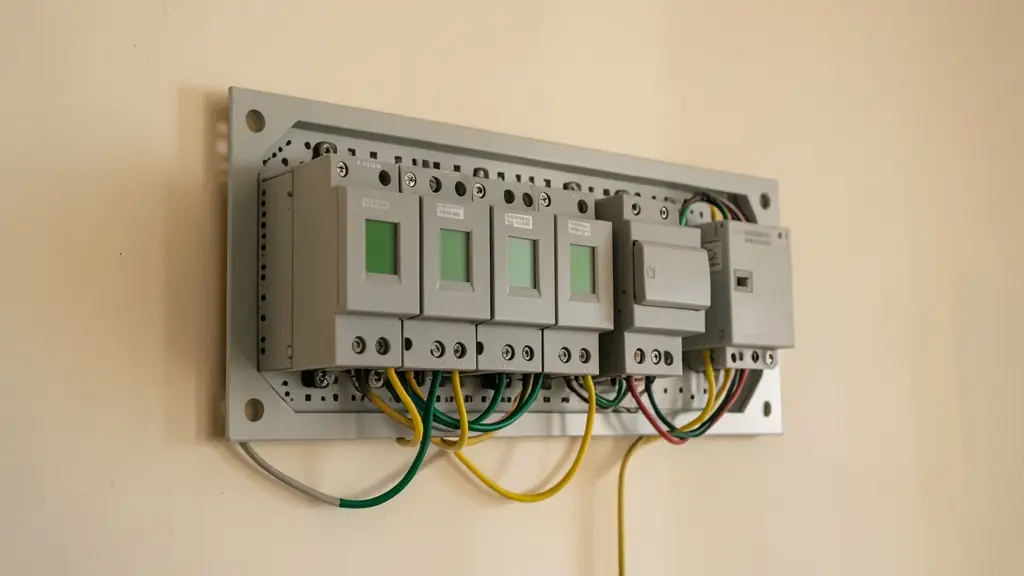
Most lightning damage in South African homes comes in through the wires, not the roof. Surge protection installation at the DB board stops much of that energy where the supply enters, before it reaches the fridge, TV, alarm and inverter. It is work for a registered electrician, who surveys the board and the earth, chooses the right devices, fits them with short connections and issues a CoC. This page explains what the job involves and what affects the price. Send one request and independent electricians near you quote you directly.
The survey comes first
A good electrician starts by checking the board: is there space on the DIN rail, is it single or three phase, how good is the earth, and is the supply overhead or underground? They ask whether the building has an external lightning conductor, a solar system, a borehole pump or a gate motor on a long cable. A weak or missing earth has to be fixed first, because a surge device sends energy to earth and cannot work without one (see earth resistance testing).
Choosing Type 1 or Type 2
A Type 1 device is tested with a lightning current wave (10/350 µs) and goes in the main board where the building has an external lightning protection system or an overhead supply. A Type 2 device (8/20 µs) suits most other main boards and sub-boards. Combined Type 1+2 units are common. Three-phase boards need protection on each phase. Devices are chosen by voltage (Uc), discharge current in kA and protection level (Up). See surge arresters for more on ratings.
How it should be fitted
- Short, straight leads to the earth bar: long loops add voltage and weaken the protection.
- Backup protection: a breaker or fuse as the maker's datasheet requires.
- Coordination: Type 2 in sub-boards far from the main board, and surge plugs at sensitive equipment.
- Other lines: data, TV aerial, phone, gate motor, intercom and borehole pump cables get their own protectors.
- CoC: the electrician updates or issues one for the work.
Replacing worn devices and cost factors
Surge devices wear out after absorbing surges, and many have a window that changes colour when they need replacing. After a storm, check the windows, or ask the electrician to. The price depends on the number of phases, whether a Type 1 device is needed, space in the board (a new enclosure costs more), any earth upgrade, extra protectors on data and gate lines, and travel. Gate motors, intercoms and borehole pumps on long cable runs often fail first in a storm, so protecting those lines is usually worth adding to the same job rather than calling the electrician back later.
What to put in your request
- Single or three phase supply
- Overhead or underground supply line
- Any lightning conductor or solar system
- Number of DB boards and sub-boards
- Other lines: data, gate motor, borehole, TV aerial
Surge Protection Installation for homes, thatch, estates, farms and industry
- Homeowners: a Type 2 device in the main board plus protectors on the gate motor and router lines
- Thatched homes and lapas: a Type 1+2 device in the board of a thatched house that has an external system
- Estates and body corporates: devices in the clubhouse, gatehouse and pump room boards, checked after each storm season
- Offices, schools, churches and clinics: three-phase devices in the main board and Type 2 units in each floor's sub-board
- Mines, plants, tanks and towers: coordinated devices on power, control and instrument lines across a plant
- Farms and smallholdings: protection on the farmhouse board and the long cable to the borehole pump
- Lodges, guest houses and venues: devices in each chalet board and the main board feeding reception and the kitchen
- Solar PV owners and installers: AC devices on the inverter output alongside DC devices on the panel side
- Builders, engineers and electricians: space and devices specified in the new board so the electrician fits them at first fix
Frequently asked questions
Do you fit surge protection yourselves?
Can I fit a surge arrester in my DB myself?
Will surge protection at the DB protect against a direct strike?
My surge arrester window has turned red. What now?
Surge Protection Installation by province and city
- Johannesburg
- Pretoria
- Centurion
- Midrand
- Sandton
- Randburg
- Roodepoort
- Krugersdorp
- Randfontein
- Germiston
- Boksburg
- Benoni
- Kempton Park
- Alberton
- Vanderbijlpark
- Vereeniging
- Durban
- Pinetown
- Pietermaritzburg
- Richards Bay
- Newcastle
- Ladysmith
- Gqeberha (Port Elizabeth)
- East London
- Kariega (Uitenhage)
- Mthatha
- Cape Town
- Bellville
- Paarl
- Stellenbosch
- George
- Worcester
- eMalahleni (Witbank)
- Middelburg
- Secunda
- Mbombela (Nelspruit)
- Rustenburg
- Brits
- Klerksdorp
- Potchefstroom
- Mahikeng
- Polokwane
- Tzaneen
- Kimberley
- Upington
- Bloemfontein
- Welkom
- Sasolburg