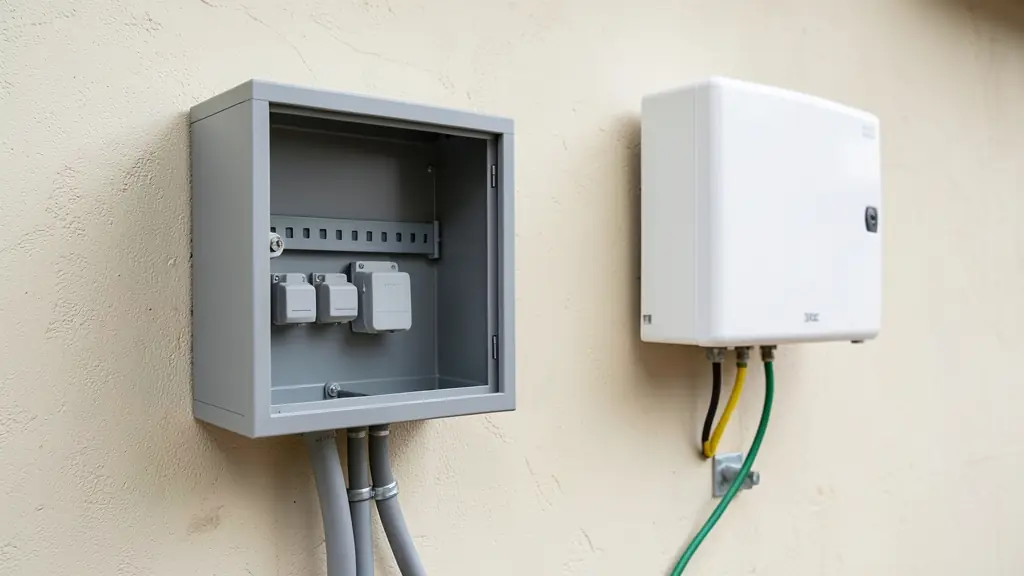
Surge protection DC devices protect a solar system on the panel side, where long cables run from the roof to the inverter and pick up surges from nearby lightning. An inverter is often the most expensive electronic item in a home, and a single storm can damage it, the batteries or the panels. DC surge arresters are rated differently from AC devices, so they must match the string voltage and the inverter. This page explains what to ask for. Send a request and independent solar installers, electricians and suppliers quote you directly.
Why the DC side needs its own devices
A PV array is a large loop of cable on an exposed roof. A strike nearby induces a surge in the strings, which travels straight to the inverter's DC input. AC surge arresters cannot protect that side: direct current behaves differently, and a DC surge arrester is built and tested to break DC safely. Use devices marked for PV use, rated for the string's maximum open-circuit voltage in cold weather, with margin.
Where the devices go
- Combiner or DC isolator box: DC SPDs at the inverter end of the strings, and at the array end too when the cable run is long.
- AC output: an AC surge arrester where the inverter connects to the board, see surge arresters.
- Batteries: protection on the battery side where the maker asks for it.
- Data: monitoring cables and network links are paths for surges too.
Always follow the inverter maker's requirements, which often specify the SPD type and rating.
Earthing and bonding the array
Surge devices only work with a good earth. Panel frames and mounting rails should be bonded with the right conductor and clamps, and the solar earth bonded into the building's single earthing system, see earthing materials. Where the building has an external lightning protection system, the array must be kept at a safe separation from it or bonded as the designer specifies; solar lightning protection explains this.
Checks and replacement
Many DC SPDs have a status window or remote contact that shows when they are spent. Check them after storms and at every service. A registered electrician must sign off the AC work and issue a certificate of compliance, and installers often check the DC devices when they do the annual panel inspection. Spent modules are usually replaced as cartridges, without changing the base.
When you ask for quotes, give the panel datasheet, the number of strings, the inverter model and the cable length from roof to inverter. A supplier can then quote devices with the right voltage and current ratings instead of a generic box. Ask whether the price includes the enclosure, isolators and fitting, because quotes often differ there rather than on the surge devices themselves. Ground-mounted arrays at farms and lodges, with long buried cable runs, often need devices at both ends.
What to put in your request
- System size in kW and the number of strings
- Maximum string voltage from the design or panel datasheet
- Inverter type and whether it is hybrid with batteries
- Cable length from the panels to the inverter
- Whether you want supply only or supply and fitting
DC Surge Protection for Solar for homes, thatch, estates, farms and industry
- Homeowners: DC devices between the roof panels and the hybrid inverter in the garage
- Thatched homes and lapas: DC protection for a ground-mounted array kept well away from the thatch
- Estates and body corporates: surge devices on solar systems for the clubhouse and gate pumps
- Offices, schools, churches and clinics: DC protection for several strings on a warehouse or office roof
- Mines, plants, tanks and towers: DC and AC SPDs on large rooftop and ground-mounted plants
- Farms and smallholdings: protection for solar borehole pumps and long cable runs to the array
- Lodges, guest houses and venues: DC devices on an off-grid array that powers the whole lodge
- Solar PV owners and installers: standard DC and AC devices on every system the installer fits
- Builders, engineers and electricians: PV surge protection specified in new homes with solar ready boards
Frequently asked questions
Does my inverter already have surge protection?
Can I use an AC surge arrester on the DC side?
Is DC surge protection enough to protect a solar system from lightning?
Do you supply or fit DC surge devices?
DC Surge Protection for Solar by province and city
- Johannesburg
- Pretoria
- Centurion
- Midrand
- Sandton
- Randburg
- Roodepoort
- Krugersdorp
- Randfontein
- Germiston
- Boksburg
- Benoni
- Kempton Park
- Alberton
- Vanderbijlpark
- Vereeniging
- Durban
- Pinetown
- Pietermaritzburg
- Richards Bay
- Newcastle
- Ladysmith
- Gqeberha (Port Elizabeth)
- East London
- Kariega (Uitenhage)
- Mthatha
- Cape Town
- Bellville
- Paarl
- Stellenbosch
- George
- Worcester
- eMalahleni (Witbank)
- Middelburg
- Secunda
- Mbombela (Nelspruit)
- Rustenburg
- Brits
- Klerksdorp
- Potchefstroom
- Mahikeng
- Polokwane
- Tzaneen
- Kimberley
- Upington
- Bloemfontein
- Welkom
- Sasolburg