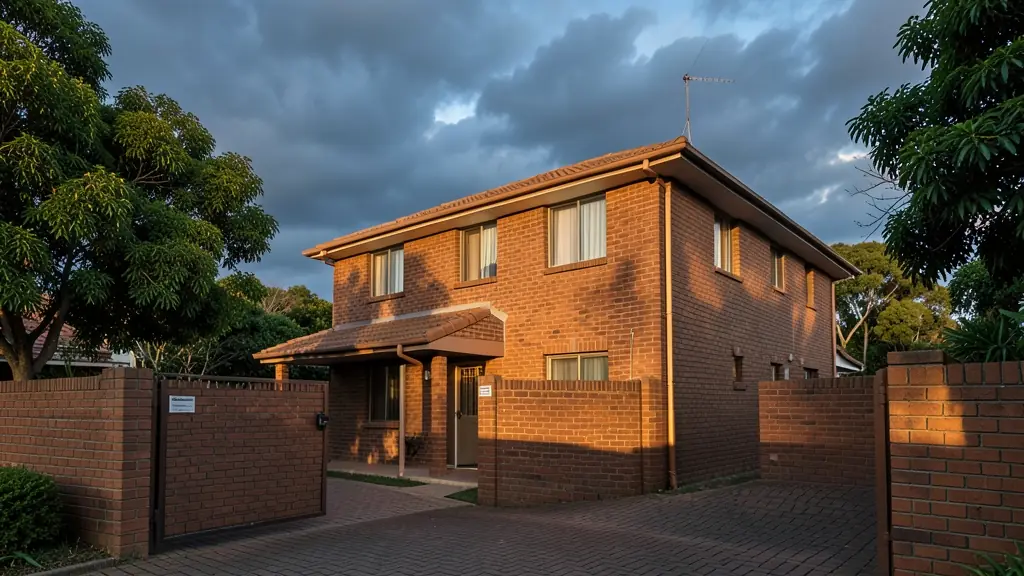
Most South African homes are never hit directly, yet plenty lose a gate motor, alarm panel, fibre router and TV to a single storm. Good home lightning protection deals with both risks: a direct strike on the roof, and the surges that arrive on cables from a strike nearby. This page explains which houses carry a higher risk, when a rod and conductor system makes sense and when surge protection alone is reasonable, which equipment usually fails first, and what to ask before you accept a quote.
Which houses carry more risk
- Houses on ridges and hilltops, such as Northcliff, Linksfield or Waterkloof Ridge
- Double storeys that stand above their neighbours, or homes beside tall trees
- Isolated farmhouses and smallholdings on open ground
- Thatched roofs and thatched lapas (see thatch roof lightning protection)
- Homes full of electronics, with a home office, solar or batteries
Where you live matters too: the Highveld and the KwaZulu-Natal Midlands see far more storms than the Western Cape, and most arrive between October and March, often in the afternoon. A house with none of these risk factors may still lose electronics to a surge, which is why almost every home benefits from some surge protection.
External system, or surge protection only
An external system, with lightning rods, down conductors and earths, protects the structure from a direct strike: fire, cracked brickwork, shattered tiles. Surge protection deals with the far more common case of a surge arriving on the supply or a cable.
For an ordinary brick-and-tile house in a suburb, many installers start with a Type 1+2 surge arrester at the main DB board plus plug-level protection, and add an external system where the risk factors above apply. For thatch or an exposed hilltop home, plan for both from the start.
What fails first
The equipment that dies in a storm is usually connected to long cables that run outside: the gate motor and its intercom, the alarm and its beams, the fibre router, the TV through its aerial or satellite cable, and the borehole pump at the end of a long buried cable. Each of those lines needs its own surge device, not only the power supply. A good earth matters as well, since surge devices need somewhere to send the current. Solar systems need DC and AC devices: see solar lightning protection.
What to ask an installer
- Which standard the design follows, and whether you get test results and a certificate
- Whether the installer is accredited through ELPA
- Which lines get surge protection, and whether a registered electrician will issue a CoC for the DB work
- How the lightning earth is bonded to the house earth
- What inspections and maintenance the system needs, and how often
Compare quotes on the same scope: the number of rods, down conductors and earth electrodes, the conductor metal, which surge devices go where, and whether testing and the certificate are included. A cheaper quote that leaves out the earth or the paperwork is not cheaper in the end.
What to put in your request
- House type, storeys and roof material
- What failed in past storms, if anything
- Gate motor, alarm, fibre, TV and borehole details
- Solar, inverter and battery, if you have them
- Single or three phase supply, if you know
Home Lightning Protection for homes, thatch, estates, farms and industry
- Homeowners: rods for a house on a ridge plus surge devices for the gate motor, alarm and router
- Thatched homes and lapas: an isolated mast system for a thatched home or lapa, with surge protection inside
- Estates and body corporates: homeowners in estates adding surge protection where the common areas already have rods
- Offices, schools, churches and clinics: a practice or office run from home, with computers that must keep running
- Mines, plants, tanks and towers: a house on a plant or mine property tied into the site's earthing
- Farms and smallholdings: a farmhouse with a borehole pump, an electric fence and a long overhead supply line
- Lodges, guest houses and venues: a guest house with a main home and cottages sharing one supply
- Solar PV owners and installers: a home with panels, inverter and batteries that need DC and AC surge devices
- Builders, engineers and electricians: rods, earths and a DB surge device specified for a new house
Frequently asked questions
Will you send someone to protect my house?
We don't do the work ourselves. We are a free quote request service: we pass your request to independent installers and registered electricians near you, and they contact you and quote directly.
Does my house need a lightning rod?
Not every house does. A hilltop position, tall trees, an isolated site, thatch or an insurer's requirement all point towards one. For a typical suburban house, surge protection is often the sensible first step. An installer can weigh up your house on site.
Will home insurance pay for lightning damage?
Many policies cover lightning and power surge damage, often with limits or conditions. Some ask for surge protection or, for thatch, a lightning protection certificate. Check your policy wording or ask your broker before you need to claim.
Is it safe to shower or use the phone in a storm?
Avoid baths, showers, corded phones and plugged-in equipment while a storm is overhead; a cellphone that is not on charge is fine. Stay inside until about 30 minutes after the last thunder, a common rule. Unplugging electronics before the storm arrives also helps.
Home Lightning Protection by province and city
- Johannesburg
- Pretoria
- Centurion
- Midrand
- Sandton
- Randburg
- Roodepoort
- Krugersdorp
- Randfontein
- Germiston
- Boksburg
- Benoni
- Kempton Park
- Alberton
- Vanderbijlpark
- Vereeniging
- Durban
- Pinetown
- Pietermaritzburg
- Richards Bay
- Newcastle
- Ladysmith
- Gqeberha (Port Elizabeth)
- East London
- Kariega (Uitenhage)
- Mthatha
- Cape Town
- Bellville
- Paarl
- Stellenbosch
- George
- Worcester
- eMalahleni (Witbank)
- Middelburg
- Secunda
- Mbombela (Nelspruit)
- Rustenburg
- Brits
- Klerksdorp
- Potchefstroom
- Mahikeng
- Polokwane
- Tzaneen
- Kimberley
- Upington
- Bloemfontein
- Welkom
- Sasolburg