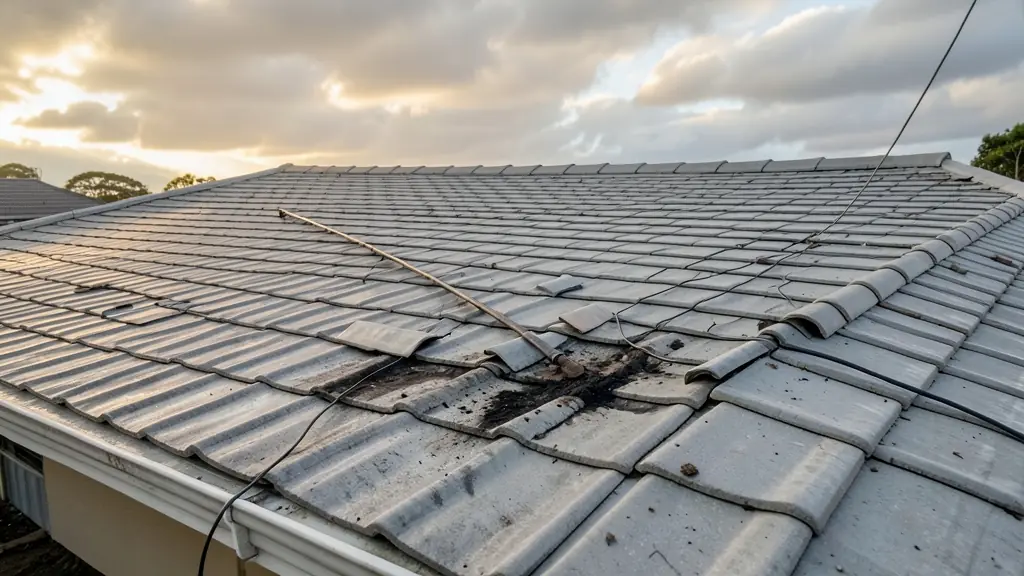
A strike on or near a house can crack tiles, blow plaster off a wall, start a fire in the roof, and burn out the gate motor, alarm, router, TV and borehole pump in one go. Often there is no visible mark at all, just dead equipment. Dealing with lightning damage means making the property safe, having the electrical installation tested, repairing what broke, documenting it for your insurer and then fixing the weakness that let it in. Send one request and independent electricians and lightning protection installers near you quote you directly.
Safety first
- Fire: check the roof space and thatch for smoke or a smell of burning, even hours later. Call the fire service if in doubt.
- Electrical: if breakers or the earth leakage tripped, or anything smells burnt, leave the power off at the main switch and call an electrician.
- Structure: cracked walls, chimneys or fallen tiles can be dangerous; keep people clear.
- Weather: stay indoors until about 30 minutes after the last thunder, a common rule, and keep off the roof until the storm has passed.
Testing and electrical repairs
A registered electrician should test the installation before it is used again: insulation, earth continuity, the earth leakage unit and any burnt wiring or plug points. Worn or blown surge arresters get replaced. Fridges, TVs and computers should be checked before you decide they are written off. Gate motors, intercom boards, alarm panels, routers and borehole pump controllers are often repaired or replaced by their own specialists. Inverters and batteries on a solar system need the solar installer.
Roof, conductor and earth repairs
If the building has a lightning conductor, have it inspected after a known strike. Look for melted or bent air rods, loose clips, burnt joints and damaged test clamps. The earth electrodes should be retested (see lightning protection inspections). Roofers repair tiles, sheeting or thatch; a thatched roof hit without a proper system needs a thatcher and, before the next storm season, an isolated system.
Reports and claims
Many insurers ask for a damage report from an electrician or technician linking the damage to the storm. Take photos before anything is moved, keep the failed equipment until the assessor has seen it, and note the date and time. Check your policy for surge cover and any requirement for surge protection. Then close the gap with surge protection at the board or a full system. Ask the electrician which way the surge came in: through the supply, the phone or fibre line, the gate motor cable, the borehole cable or the roof. That answer tells you where protection is missing.
What to put in your request
- What failed: appliances, gate motor, pump, wiring
- Visible damage: tiles, walls, thatch or a conductor
- Whether breakers or the earth leakage tripped
- Whether there is a lightning conductor or surge devices
- Whether you need a report for an insurance claim
Lightning Damage Repairs for homes, thatch, estates, farms and industry
- Homeowners: a test of the wiring, new surge modules and a report after the TV and gate motor failed
- Thatched homes and lapas: an urgent check of the thatch and roof space, then an isolated system before the next storm
- Estates and body corporates: repairs to the gatehouse, booms and cameras after a strike on the perimeter fence
- Offices, schools, churches and clinics: an assessment of a school or office board and network after a storm took out equipment
- Mines, plants, tanks and towers: a damage survey of control and instrument circuits and the earth grid after a strike
- Farms and smallholdings: a new borehole pump controller and surge protection on the long supply cable
- Lodges, guest houses and venues: a check of each chalet's thatch, wiring and mast after a strike in the camp
- Solar PV owners and installers: inverter and DC surge devices replaced and the array bonding checked after a storm
- Builders, engineers and electricians: roof and conductor repairs coordinated with the electrician and roofer on one job
Frequently asked questions
Do you repair lightning damage yourselves?
Lightning didn't hit my house. Why did my equipment die?
Will my insurer pay for lightning damage?
Should I upgrade after a strike?
Lightning Damage Repairs by province and city
- Johannesburg
- Pretoria
- Centurion
- Midrand
- Sandton
- Randburg
- Roodepoort
- Krugersdorp
- Randfontein
- Germiston
- Boksburg
- Benoni
- Kempton Park
- Alberton
- Vanderbijlpark
- Vereeniging
- Durban
- Pinetown
- Pietermaritzburg
- Richards Bay
- Newcastle
- Ladysmith
- Gqeberha (Port Elizabeth)
- East London
- Kariega (Uitenhage)
- Mthatha
- Cape Town
- Bellville
- Paarl
- Stellenbosch
- George
- Worcester
- eMalahleni (Witbank)
- Middelburg
- Secunda
- Mbombela (Nelspruit)
- Rustenburg
- Brits
- Klerksdorp
- Potchefstroom
- Mahikeng
- Polokwane
- Tzaneen
- Kimberley
- Upington
- Bloemfontein
- Welkom
- Sasolburg