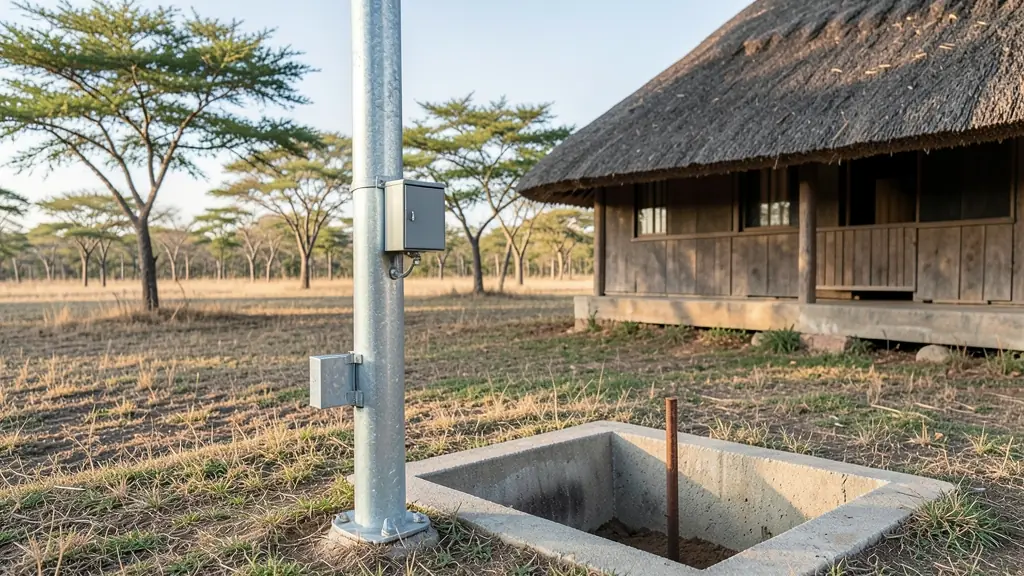
A lightning protection system sits on the roof for years with no one looking at it. Clips work loose, joints corrode, conductors get stolen or pulled off during building work, and earth readings creep up. A lightning protection inspection finds these faults before a strike does. This page explains what an inspection and test involve, the faults inspectors find most often, how often to inspect and what the report or certificate should contain. Send one request and independent installers and inspectors in your area quote you directly.
What an inspection includes
- Visual check: air rods, masts, conductors, clips, joints, test clamps and bonds, from the ground and on the roof where it is safe.
- Continuity testing: a low-resistance reading through each conductor and joint, from air terminal to test point.
- Earth resistance: each electrode measured with the test clamp opened (see earth resistance testing).
- Bonding and surge devices: a look at bonds to services and the indicator windows on surge arresters in the DB.
- Report: findings, readings, photos and recommended repairs.
Faults inspectors find most often
Stolen copper is near the top of the list in South Africa, often the lower metres of a down conductor or the earth tape. Loose or missing clips, broken or seized test joints, copper and aluminium joined without a bimetal connector, and conductors cut during roof repairs or a solar install are common. On thatch, the worst fault is a conductor fixed onto or through the thatch, which can start a fire. Earth readings that were fine when installed are often high years later. Other finds include TV aerials, solar frames or satellite dishes added near the air terminals and never bonded, and test clamps buried under new paving so no one can open them. Most of these are cheap to fix once found.
How often to inspect
SANS 62305-3 sets inspection intervals by protection level, shorter for the stricter levels and for critical systems. Many homeowners have a visual check each year before the summer storms and a full test every few years. Always inspect after a known strike, after roof work or a new solar installation, and before you sell or renew a policy that asks for it.
Certificates for insurers and sales
Many insurers ask for a current certificate on thatched buildings, so check your policy wording. The certificate should name the standard, list each test point with its reading, and be signed by the inspector. If the system fails, ask for a priced list of repairs and a retest so you end up with a clean certificate. Repairs follow the same rules as a new installation.
What to put in your request
- Type of system: rods on the roof, masts or a roof mesh
- Number of buildings and down conductors
- When it was installed and last tested
- Whether the roof is thatch
- Who needs the certificate: insurer, buyer or estate
Lightning Protection Inspections and Certificates for homes, thatch, estates, farms and industry
- Homeowners: a yearly check of the conductors and earth readings before the summer storms
- Thatched homes and lapas: an inspection to confirm nothing is fixed to the thatch and the masts are still earthed
- Estates and body corporates: inspections of the clubhouse, gatehouse and common buildings for the body corporate file
- Offices, schools, churches and clinics: scheduled testing of a school or office system with a report for the facilities file
- Mines, plants, tanks and towers: inspections at intervals set by the protection level, with readings tracked over time
- Farms and smallholdings: a check of the farmhouse and sheds after copper theft or a strike nearby
- Lodges, guest houses and venues: a full test across every thatched chalet and the main lapa before insurance renewal
- Solar PV owners and installers: a check that a new solar install did not cut conductors or leave frames unbonded
- Builders, engineers and electricians: an inspection after alterations to confirm the system still meets the original design
Frequently asked questions
Do you inspect lightning protection systems yourselves?
Can I inspect my own system?
How long does an inspection take?
My system was installed by someone who has closed down. Can it still be certified?
Lightning Protection Inspections and Certificates by province and city
- Johannesburg
- Pretoria
- Centurion
- Midrand
- Sandton
- Randburg
- Roodepoort
- Krugersdorp
- Randfontein
- Germiston
- Boksburg
- Benoni
- Kempton Park
- Alberton
- Vanderbijlpark
- Vereeniging
- Durban
- Pinetown
- Pietermaritzburg
- Richards Bay
- Newcastle
- Ladysmith
- Gqeberha (Port Elizabeth)
- East London
- Kariega (Uitenhage)
- Mthatha
- Cape Town
- Bellville
- Paarl
- Stellenbosch
- George
- Worcester
- eMalahleni (Witbank)
- Middelburg
- Secunda
- Mbombela (Nelspruit)
- Rustenburg
- Brits
- Klerksdorp
- Potchefstroom
- Mahikeng
- Polokwane
- Tzaneen
- Kimberley
- Upington
- Bloemfontein
- Welkom
- Sasolburg