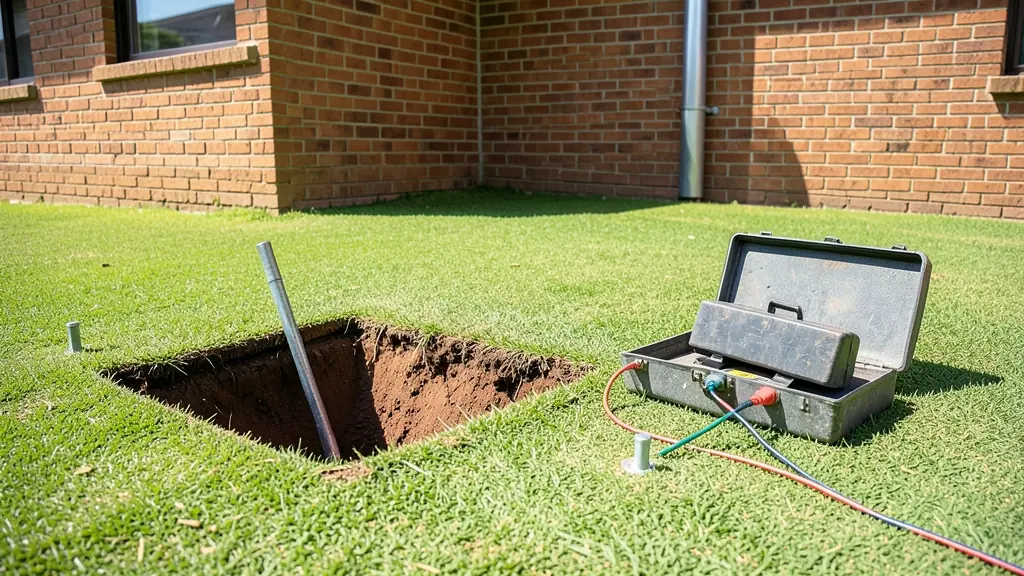
An earth electrode looks the same whether it works or not, so the only way to know is to measure it. An earthing test measures how easily current flows from the electrode into the soil, in ohms. For a lightning protection system that reading decides whether a strike spreads safely into the ground. This page explains the test methods, soil resistivity, what a reading means, why it changes with the seasons and how a high reading is brought down. Send one request and independent testers and installers near you quote you directly.
How the test is done
- Fall of potential: the tester drives current between the electrode under test and a stake some distance away, and measures voltage with a second stake in between. It is the classic method and needs space for the stakes in a straight line.
- Clamp testing: a clamp meter reads the resistance of an electrode in a connected earthing system without disconnecting it or driving stakes. It is quick and useful where there is paving, but it only works in suitable circuits.
- Continuity: a separate low-resistance check on conductors and joints.
For lightning systems the test clamp at each down conductor is opened so each electrode is read on its own.
Soil resistivity before design
Before a new earth is designed, a four-pole (Wenner) test measures the resistivity of the soil at several spacings, which shows how it changes with depth. The designer uses it to decide on rod lengths, rings or plates. It is common practice for earthing installations on large sites, substations and towers, and useful on any site where earlier electrodes gave poor readings.
What the reading means
A common target for a lightning protection earth is below 10 ohms where practical. In rocky or very dry ground that can be hard, and the standard allows the layout of the earth to compensate. The electrical earth for the wiring is a separate requirement that the electrician checks for the CoC. Readings change with the seasons: soil is drier in the Highveld winter, so a reading taken then is often higher than after summer rain. Keep past reports so you can compare.
Bringing a high reading down
The usual fixes are deeper or coupled earth spikes, extra electrodes spaced well apart, a buried ring linking them, and earth enhancing compound in poor soil. Corroded clamps and loose joints also push readings up, so they get cleaned or replaced first. Always retest after the work. A good report lists each test point, the method used, the reading, the date and the weather or soil conditions, with a note of any point that needs attention. Keep it with your lightning protection certificate, because an insurer, a buyer or the next inspector will want to compare with it.
What to put in your request
- Number of electrodes or down conductors
- Whether test clamps and inspection pits are fitted
- Ground cover: lawn, paving, tar or rock
- Any previous readings and when they were taken
- Why you need it: insurer, sale, design or a fault
Earth Resistance Testing for homes, thatch, estates, farms and industry
- Homeowners: each electrode at the foot of the down conductors read and recorded with the clamps open
- Thatched homes and lapas: readings on every mast earth around a thatched house before the insurance renewal
- Estates and body corporates: earth readings across clubhouse, gatehouse and pump station kept on file each year
- Offices, schools, churches and clinics: a test of the building earth and LPS electrodes for the maintenance records
- Mines, plants, tanks and towers: a full earth grid survey at a plant or substation with readings compared to earlier years
- Farms and smallholdings: readings in dry ground at the farmhouse and borehole after pumps kept failing
- Lodges, guest houses and venues: every chalet mast earth tested in one visit with a reading for each
- Solar PV owners and installers: a check of the array earth and its bond to the house earth after installation
- Builders, engineers and electricians: a Wenner soil test on a new site so the engineer can design the earth
Frequently asked questions
Do you do earth resistance testing yourselves?
Is 10 ohms a legal requirement?
Can an electrician's CoC test replace an earthing test for my lightning conductor?
How often should the earth be tested?
Earth Resistance Testing by province and city
- Johannesburg
- Pretoria
- Centurion
- Midrand
- Sandton
- Randburg
- Roodepoort
- Krugersdorp
- Randfontein
- Germiston
- Boksburg
- Benoni
- Kempton Park
- Alberton
- Vanderbijlpark
- Vereeniging
- Durban
- Pinetown
- Pietermaritzburg
- Richards Bay
- Newcastle
- Ladysmith
- Gqeberha (Port Elizabeth)
- East London
- Kariega (Uitenhage)
- Mthatha
- Cape Town
- Bellville
- Paarl
- Stellenbosch
- George
- Worcester
- eMalahleni (Witbank)
- Middelburg
- Secunda
- Mbombela (Nelspruit)
- Rustenburg
- Brits
- Klerksdorp
- Potchefstroom
- Mahikeng
- Polokwane
- Tzaneen
- Kimberley
- Upington
- Bloemfontein
- Welkom
- Sasolburg