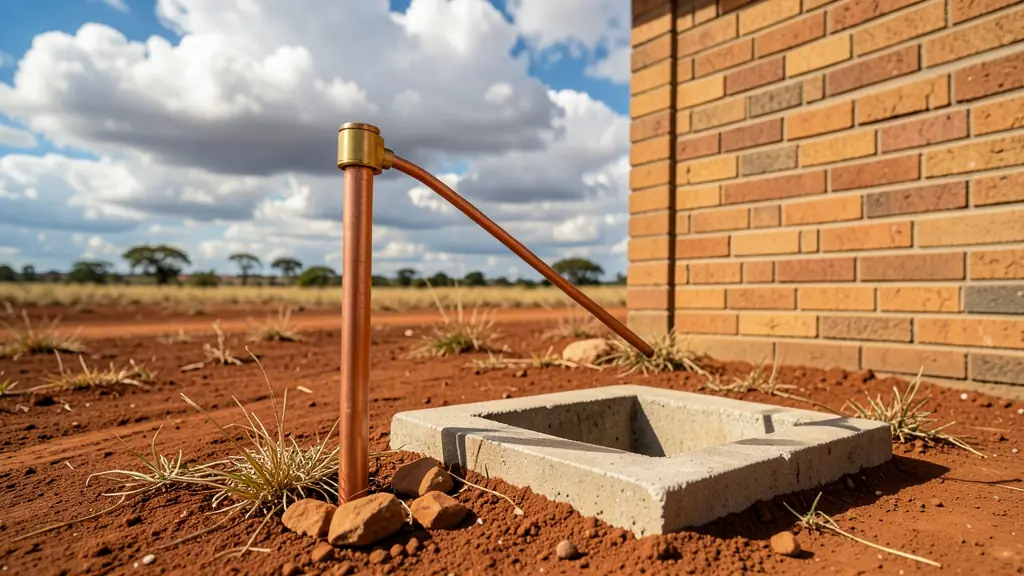
An earth spike, also called an earth rod or earthing rod, is a metal rod driven into the ground to connect an electrical installation or a lightning protection system to earth. It is the part you never see and the part everything else depends on: surge arresters, lightning conductors and the electrical earth all need a low-resistance path into the soil. This page covers the types of rod, lengths and couplers, clamps and pits, and how many you need. Send a request and independent suppliers and earthing contractors quote you directly.
Types of earth rod
- Copper-bonded steel: a steel core with copper bonded to it. Strong enough to drive and the most common choice.
- Solid copper: good corrosion resistance, but softer and harder to drive into hard ground.
- Galvanised steel: lower cost, but the zinc wears away faster in some soils.
- Stainless steel: for aggressive soils and where copper theft is a worry.
Rods often come in 1.2 m or 1.5 m lengths. When comparing prices, check the thickness of the copper layer and the rod diameter, not only the length: a thin coating can be scraped off as the rod is driven into stony ground, leaving bare steel that rusts. Ask the supplier for the maker's datasheet.
Length, couplers and driving
Ground near the surface dries out in winter, so deeper usually means a more stable reading. Rods can be joined with threaded couplers and driven deeper, with a driving head on top so the thread is not damaged. In rocky ground a rod may stop short; then several shorter rods spaced apart, earth tape in a trench or an earth plate can work better. Soil resistivity testing before design tells the installer which approach suits the site.
How many, and how to improve a poor earth
A lightning protection system usually has an earth electrode at the foot of every down conductor, often linked by a ring conductor around the building. A common target for the lightning protection earth is below 10 ohms where practical; dry, sandy or rocky ground makes that harder. Rods spaced at least their own length apart work better than rods close together. In poor soil, earth enhancing compound around the rod can lower the reading. See earth resistance testing for how readings are taken.
Clamps, pits and bonding
Use clamps made for the rod and conductor size, ideally in an inspection pit so the joint can be checked and tested. Avoid joining copper and aluminium directly. Every earth on the property, lightning, electrical, telecom and solar, should be bonded into one earthing system, which is covered under earthing materials and earthing installation.
Before anyone drives a rod, find out where the water pipes, sewer lines, irrigation and buried cables run. A rod through a pipe or a supply cable is an expensive mistake. On farms and lodges, mark the rod positions on a sketch so later builders and the next inspector can find them.
What to put in your request
- What the earth is for: lightning conductor, DB board or solar
- Rod type wanted: copper-bonded, copper, galvanised, stainless
- Number of rods and length, or the depth you need
- The soil: clay, sand, rock or unknown
- Whether you need clamps, couplers, pits and compound too
Earth Spikes and Earth Rods for homes, thatch, estates, farms and industry
- Homeowners: a rod at each down conductor and a sound earth for the DB board
- Thatched homes and lapas: rods at the foot of each mast, well away from the thatched roof
- Estates and body corporates: rods and pits for the clubhouse, guardhouse and shared pump stations
- Offices, schools, churches and clinics: coupled rods linked by a ring around a school or office block
- Mines, plants, tanks and towers: rod groups and earth mats for tanks, substations and plant rooms
- Farms and smallholdings: rods for the farmhouse, sheds, borehole pumps and electric fence energisers
- Lodges, guest houses and venues: rods for every mast and chalet board across a spread-out camp
- Solar PV owners and installers: rods for a ground-mounted array bonded to the main earth
- Builders, engineers and electricians: earth rods and pits specified before the slab and paving go down
Frequently asked questions
How deep should an earth spike go?
Can I drive an earth spike myself?
Why does my earth reading change through the year?
Do you sell earth spikes yourselves?
Earth Spikes and Earth Rods by province and city
- Johannesburg
- Pretoria
- Centurion
- Midrand
- Sandton
- Randburg
- Roodepoort
- Krugersdorp
- Randfontein
- Germiston
- Boksburg
- Benoni
- Kempton Park
- Alberton
- Vanderbijlpark
- Vereeniging
- Durban
- Pinetown
- Pietermaritzburg
- Richards Bay
- Newcastle
- Ladysmith
- Gqeberha (Port Elizabeth)
- East London
- Kariega (Uitenhage)
- Mthatha
- Cape Town
- Bellville
- Paarl
- Stellenbosch
- George
- Worcester
- eMalahleni (Witbank)
- Middelburg
- Secunda
- Mbombela (Nelspruit)
- Rustenburg
- Brits
- Klerksdorp
- Potchefstroom
- Mahikeng
- Polokwane
- Tzaneen
- Kimberley
- Upington
- Bloemfontein
- Welkom
- Sasolburg