Understanding Lightning Protection Systems
Overview of Lightning Protection Components – Description of air terminals, down conductors, and grounding systems
Lightning strikes are unpredictable, yet their destructive force can be mitigated with carefully designed lightning protection systems. Understanding the core components—air terminals, down conductors, and grounding systems—is essential to ensure accurate lightning protection calculation. These elements work together like a finely tuned orchestra, directing the electrical discharge safely into the earth, away from valuable assets and human safety.
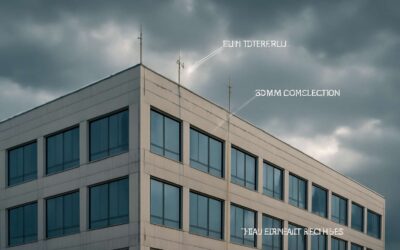
Air terminals, often called lightning rods, are strategically placed at the highest points of a structure. Their role is to intercept lightning strikes, preventing the electrical discharge from damaging the building. Down conductors connect these terminals to the grounding system, channeling the energy underground with minimal resistance. Grounding systems, consisting of conductive rods or plates buried deep in the earth, disperse the lightning’s energy safely, reducing the risk of fire or electrical surges.
- Proper placement of air terminals
- Accurate sizing of down conductors
- Effective grounding systems for lightning protection calculation
Every element demands precise calculation to ensure a lightning protection system functions flawlessly—transforming chaos into calm amidst nature’s fury.
Importance of Proper Lightning Protection – Preventing damage to buildings and ensuring safety
In the theater of nature’s fury, lightning strikes can be both majestic and merciless. A single bolt holds the power to devastate entire structures, turning dreams into ash and safety into peril. That’s why the importance of proper lightning protection cannot be overstated—each calculated measure acts as a shield against chaos, transforming raw electrical might into a controlled, safe discharge. The art of lightning protection calculation becomes a vital craft, meticulously designing systems that stand as silent sentinels, safeguarding lives and assets alike.
Every structure, whether humble or grand, demands a tailored approach—where precise placement, sizing, and grounding form the triumvirate of safety. When these elements are woven together with care, they create an unbreakable chain of defense. Ensuring that lightning is directed harmlessly into the earth, away from critical components, preserves not just property but the very essence of human safety. In this dance with the unpredictable, mastery of lightning protection calculation is the key to turning nature’s wrath into a subdued, controlled force—an orchestra of safety amid the storm.
Regulations and Standards – Overview of IEC, NFPA, and local codes
In the realm of safeguarding our structures against nature’s most ferocious display, understanding the labyrinth of lightning protection systems regulations and standards is paramount. South Africa’s unique climatic tapestry demands that engineers and safety professionals adhere to a tapestry of global and local codes—each woven with the intent to shield and preserve. Among these, the International Electrotechnical Commission (IEC) standards stand as a beacon of international harmony, establishing rigorous guidelines for lightning protection calculation and system design.
Simultaneously, the National Fire Protection Association (NFPA) offers a comprehensive framework tailored specifically to North American contexts, emphasizing safety and resilience. Local codes, often tailored by regional authorities, weave additional layers of specificity that reflect South Africa’s distinctive environment and infrastructural nuances. Navigating this regulatory terrain can seem daunting, yet it is the cornerstone for ensuring that lightning protection systems are both compliant and effective. Whether it’s the IEC 62305 series or local mandates, understanding these standards turns a complex task into a precise art—transforming raw electrical forces into a controlled, predictable outcome.
To streamline compliance, many professionals adopt a structured approach, often involving:
- Reviewing international standards like IEC 62305 for comprehensive guidance on lightning protection calculation
- Cross-referencing with local building codes and safety regulations
- Engaging with regional amendments that address South Africa’s specific climate and infrastructural challenges
By harmonizing these diverse standards, the process of designing effective lightning protection systems becomes a meticulous dance—one that ensures safety, durability, and peace of mind amid the chaos of storms. In this intricate weave of regulation and engineering, mastery of lightning protection calculation remains the key to unlocking resilient defenses against the unpredictable fury of nature.
Fundamentals of Lightning Protection Calculation
Key Factors Influencing Calculation – Height, shape, environment, and building structure
Lightning strikes are unpredictable, but their impact can be mitigated with precise lightning protection calculation. The key factors influencing this calculation are often overlooked, yet they play a critical role in ensuring safety and damage prevention. Height is paramount—taller structures attract more strikes, so accurately measuring the tallest point is essential. Shape also matters; complex or pointed structures tend to attract lightning more than smooth, rounded surfaces. The environment surrounding a building influences lightning behavior, especially in areas with high atmospheric instability or frequent thunderstorms. Lastly, the building’s structure itself determines how effectively lightning energy is safely diverted.
Understanding these elements helps engineers develop optimal lightning protection systems that comply with international standards and local codes. A thorough lightning protection calculation considers these variables to prevent costly damage and safeguard lives. When done right, it ensures your property is shielded against nature’s fury, turning chaos into control!
Basic Principles and Assumptions – Lightning strike probability, strike point determination
Lightning strikes are a stark reminder of nature’s unpredictable fury. Yet, within this chaos lies an intricate dance of probabilities that can be deciphered through precise lightning protection calculation. At its core, this process hinges on fundamental principles—estimating the likelihood of a strike and identifying potential strike points with meticulous accuracy.
The probability of a lightning strike isn’t left to chance; it is rooted in statistical models that analyze environmental conditions, historical weather data, and the specific characteristics of the site. Assumptions made during the initial phase of lightning protection calculation serve as guiding parameters, shaping the entire safety strategy. These assumptions include factors such as atmospheric instability and the local terrain’s influence on lightning behavior.
To streamline the process, engineers often utilize a structured approach, which may involve:
- Assessing the strike probability based on environmental variables
- Determining the most probable strike points through shape and height analysis
Understanding these fundamental principles transforms a mere safety measure into an intelligent shield—an essential component in safeguarding both property and life against the relentless power of nature’s lightning strikes.
Tools and Software for Calculation – Popular programs and manual methods
Modern lightning protection calculation relies heavily on specialized tools and software that bring precision and efficiency to the process. Gone are the days when manual methods, based purely on charts and rough estimations, were the norm. Today, engineers turn to sophisticated programs that incorporate complex algorithms, environmental data, and site-specific parameters to deliver accurate results. These tools help determine the most probable strike points, assess the likelihood of lightning hits, and optimize the design of protection systems.
Popular programs in the industry include software like Lightning Master, LPI (Lightning Protection International), and TL software. They facilitate comprehensive lightning protection calculation by simulating lightning behavior under various conditions. These programs often come with built-in standards compliance, ensuring designs meet IEC, NFPA, and local South African codes. While software streamlines calculations, some professionals still rely on manual methods—using formulas, charts, and environmental assessments—to verify results or when digital tools are unavailable.
- Evaluating environmental variables such as terrain, climate, and building height
- Applying standardized safety margins based on local regulations
- Ensuring the lightning protection calculation aligns with international standards to guarantee safety and compliance
Whether digital or manual, these methods aim to create a reliable shield against lightning strikes, emphasizing the importance of thorough analysis and precise calculations in safeguarding assets and lives.
Step-by-Step Process of Lightning Protection Calculation
Assessing Lightning Strike Risk – Environmental and structural analysis
Lightning strikes are unpredictable yet devastating forces of nature, and understanding how to perform a precise lightning protection calculation can mean the difference between resilience and ruin. The process begins with a thorough environmental and structural analysis, where the topography, climate patterns, and building design are meticulously examined. This step is crucial because it directly influences the likelihood of a lightning strike and helps identify vulnerable points on the structure.
Next, a detailed assessment of potential strike points is carried out, considering factors such as building height, shape, and surrounding environment. Using specialized tools and software—like lightning risk assessment programs—engineers can simulate various scenarios, making sure every possible threat is accounted for. In some cases, manual calculations are employed to verify results, especially in simpler structures or unique environments.
To streamline the process, an ordered approach can be adopted:
- Gather environmental data and structural details.
- Identify potential strike points based on shape and height.
- Utilize lightning protection calculation software to model strike probabilities.
- Evaluate risk levels and determine the necessary protection system components.
Throughout this process, the goal remains clear: ensure safety and compliance while safeguarding assets against nature’s fiercest electrical display. Every detail in the calculation contributes to a resilient lightning protection system, especially vital for South African structures exposed to intense storm activity.
Determining Critical Protection Areas – Zones requiring lightning protection
In the shadowed corridors of nature’s fury, lightning strikes are both a spectacle and a threat. For those tasked with safeguarding South African structures from these relentless electrical tempests, a meticulous lightning protection calculation is the key to resilience. This process involves the precise determination of critical protection areas—zones where lightning is most likely to strike and where safety measures must be fortified.
To accurately delineate these zones, an ordered approach is often employed:
- Begin with a detailed environmental and structural analysis, considering topography, climate, and building shape.
- Identify potential strike points by examining the building’s height, form, and surrounding environment.
- Utilize specialized lightning protection calculation software to simulate strike probabilities and visualize risk zones.
- Assess the results to determine the critical protection areas that require the installation of air terminals, down conductors, and grounding systems.
This systematic methodology reveals the dark intricacies of where lightning is most likely to strike, enabling engineers to establish zones requiring lightning protection. It’s a dance with the unseen forces of nature—an effort to tame chaos and secure what matters most beneath the looming threat of a storm’s wrath.
Calculating Upward and Downward Lightning Strike Zones – Using standardized formulas and charts
The process of lightning protection calculation is a delicate dance with nature’s most unpredictable force. To accurately determine upward and downward lightning strike zones, engineers employ a blend of precise formulas and visual charts—tools that transform chaos into clarity. By applying standardized lightning protection calculation methods, experts can predict potential strike points with remarkable accuracy, ensuring safety and resilience.
First, the height and shape of the structure are analyzed, as these influence the upward lightning zone. Then, environmental factors such as local topography and climate are incorporated into the model. Using specialized software, these variables are synthesized into a comprehensive simulation that reveals the most probable lightning strike areas.
A typical approach involves an ordered process:
- Assessing the building’s dimensions and surroundings
- Applying relevant formulas for strike probability
- Visualizing risk zones through software-generated charts
This meticulous process not only illuminates the dark intricacies of where lightning is most likely to strike but also guides the placement of air terminals and grounding systems—crucial components in an effective lightning protection system. As we refine each calculation, we forge a path toward safeguarding South African structures from the tempest’s fury, transforming uncertainty into a shield of certainty.
Sizing Conductors and Earthing Systems – Design considerations for effective protection
In the shadowed realm of lightning protection calculation, precision is the only refuge against the chaos of thunderous skies. The process begins with an intricate assessment of the conductor and earthing system sizing—an act that demands both science and artistry. Every wire, every connection must be meticulously chosen to withstand the relentless fury of a lightning strike, ensuring the sanctity of the structure remains unbroken.
Design considerations revolve around understanding the electrical dance between the lightning’s ferocity and the building’s defenses. Factors such as conductor material, cross-sectional area, and grounding resistance are scrutinized to forge a resilient shield. An ordered process guides this journey:
- Evaluating the structure’s height and shape
- Analyzing environmental influences like humidity and topography
- Applying standardized formulas for conductor sizing and earthing system resistance
Software tools, with their darkened interfaces and complex algorithms, serve as the modern oracles, translating raw data into vivid visualizations of risk zones. Through this meticulous calculation, engineers craft a lattice of protection that transforms the unpredictable wrath of lightning into a manageable force—an unyielding fortress for South African structures amid nature’s tempestuous symphony.
Design Considerations and Best Practices
Placement of Air Terminals – Optimal positioning and height
In the intricate dance between nature’s fury and human ingenuity, the placement of air terminals emerges as a vital element in lightning protection calculation. Imagine a sentinel standing tall amidst the tempest—its position can mean the difference between safety and catastrophe. Optimal positioning isn’t just about height; it’s about strategic alignment with the building’s geometry and environmental factors. When selecting the ideal placement, consider the building’s highest points and the most exposed surfaces, ensuring air terminals act as inviting lightning conductors rather than accidental strikes.
Height plays a pivotal role in this delicate choreography. Air terminals should be elevated sufficiently to intercept upward lightning discharges, yet positioned thoughtfully to avoid creating unintended strike zones. For instance, a common best practice is to place them at least 300 millimeters above the highest point of the structure—this subtle elevation acts as a magnetic beacon for lightning, guiding strikes harmlessly toward the grounding system. To assist in these decisions, engineers often employ lightning protection calculation tools, which simulate potential strike zones with remarkable precision.
Furthermore, the spatial distribution of air terminals must be evenly balanced across the structure’s surface. An uncoordinated array can inadvertently increase vulnerability, making the entire system less effective. In practice, the placement should follow a careful analysis of the building’s shape and surroundings, ensuring that critical zones—like rooftop equipment or sensitive electrical installations—are adequately protected. When executed with meticulous attention to these design considerations, the lightning protection system becomes a harmonious extension of the building’s architecture, safeguarding both property and lives with unwavering resilience.
Conductor Routing Techniques – Ensuring minimal inductance and maximum safety
In the realm of lightning protection calculation, the routing of conductors is a tapestry woven with precision and foresight. The choreography of these pathways must be meticulously designed to minimize inductance—an invisible force that can amplify the destructive power of lightning surges—while maximizing safety for both structure and occupants. When conductors are poorly routed, the risk of high-voltage transient effects escalates, threatening the integrity of electrical systems and endangering lives.
Optimal conductor routing embraces a philosophy of directness and simplicity. Avoiding sharp bends and unnecessary loops, the conductors should follow a smooth, unobstructed path from air terminals down to the grounding system. This approach reduces inductance and ensures lightning energy is swiftly conveyed away from vulnerable components. To achieve this, engineers often employ specialized lightning protection calculation tools that model the electromagnetic behavior of conductor arrangements, revealing potential weak points before installation begins.
Additionally, the routing strategy must account for environmental factors and building architecture. For instance, crossing conductors at right angles or maintaining adequate separation distances helps prevent inductive coupling that could compromise system performance. When planning the conductor pathways, consider:
- Maintaining a consistent, low-resistance path
- Ensuring robust connections at junction points
- Incorporating flexible, corrosion-resistant materials suitable for South African climates
By adhering to these best practices, the lightning protection calculation transforms from a theoretical exercise into a practical blueprint—one that guarantees the protection system operates harmoniously with the structure, offering resilient safeguards against the tempest’s wrath.
Grounding System Design – Surface resistivity, grounding rods, and test points
Grounding system design is the backbone of effective lightning protection calculation. Proper grounding ensures lightning energy is safely dissipated into the earth, minimizing damage and safety risks. Surface resistivity plays a crucial role here; in South Africa, soil conditions vary widely, affecting how well the grounding system performs. Low-resistance grounding rods are essential for creating a reliable path to earth, especially in areas with high soil resistivity. Testing points allow engineers to verify system performance post-installation, ensuring the grounding system maintains its integrity over time.
To optimize the grounding system, consider the following best practices:
- Use corrosion-resistant materials suitable for South African climates
- Maintain adequate spacing between grounding rods to prevent inductive coupling
- Regularly test and monitor grounding resistance
These steps reinforce the importance of thorough lightning protection calculation, which accounts for environmental factors and soil conditions. By integrating these considerations, the grounding system becomes a resilient shield, ready to handle lightning strikes effectively and ensure safety across the structure.
Integration with Building Architecture – Aesthetic and functional considerations
Integrating lightning protection calculation into building architecture requires a delicate balance between safety and aesthetics. In South Africa, where climate variability can influence lightning risk, designing a system that is both effective and visually unobtrusive is crucial. Modern solutions allow for seamless incorporation of air terminals and conductors, ensuring safety without compromising design integrity.
One effective approach is to consider the placement of lightning protection components early in the architectural planning phase. This foresight helps in avoiding bulky installations that could detract from the building’s visual appeal. Additionally, selecting materials that blend with the building’s exterior not only maintains aesthetic harmony but also enhances durability. Incorporating these considerations ensures that the lightning protection system remains a resilient shield while respecting the building’s architectural language.
- Coordinate with architects to hide conductors within structural elements
- Use low-profile air terminals that do not interfere with the building’s silhouette
- Opt for corrosion-resistant materials suited to South African climates for longevity
Ultimately, effective lightning protection calculation isn’t just about compliance; it’s about creating a safe environment that complements the architectural vision. Thoughtful integration transforms safety measures from an eyesore into a seamless part of the building’s design narrative.
Validating and Documenting Lightning Protection Calculations
Simulation and Testing – Ensuring system effectiveness
Ensuring the resilience of a lightning protection system hinges on rigorous validation and meticulous documentation of the lightning protection calculation. Without this, even the most sophisticated designs risk falling short when nature’s fury unleashes its power. Verifying these calculations through simulation and testing is not merely a procedural step—it transforms theoretical models into tangible safeguards. Modern software tools allow engineers to simulate lightning strike scenarios, providing invaluable insights into potential vulnerabilities and system performance.
Documenting every phase of the lightning protection calculation process transforms abstract data into a comprehensive record, essential for regulatory compliance and future audits. It also facilitates continuous improvement, enabling engineers to refine system components based on real-world testing outcomes. For instance, conducting ground resistance tests or high-voltage impulse tests ensures that grounding systems meet the specified standards, confirming their ability to dissipate lightning currents efficiently.
In the end, validation and testing do more than safeguard buildings—they uphold safety, and instill confidence that the lightning protection system will perform when it matters most. This diligent approach underscores the importance of a well-rounded lightning protection calculation, blending science with strategic foresight to outmatch the unpredictable force of lightning.
Documentation Requirements – Detailed reports for compliance
In the realm of lightning protection, thorough validation and meticulous documentation of the lightning protection calculation are not just bureaucratic steps—they are the backbone of effective safety measures. Accurate documentation provides a clear audit trail, demonstrating compliance with stringent standards such as IEC and NFPA, which are critical for regulatory approval in South Africa. Without detailed records, even the most advanced lightning protection system risks falling short when faced with a real storm.
Ensuring that every phase of the lightning protection calculation is properly documented facilitates transparency and future assessments. These reports should include specifics like site conditions, calculation assumptions, and test results. For instance, ground resistance tests and impulse response measurements are often part of the validation process. Incorporating tools like specialized software or manual calculations ensures that the system design aligns with the actual environmental and structural variables. A well-prepared report not only satisfies compliance but also enables continuous improvement of the lightning protection system.
In South Africa, adherence to local standards and detailed documentation of the lightning protection calculation are vital. They serve as a safeguard, confirming that grounding systems and air terminal placements meet the required safety thresholds. Proper records are essential for legal compliance, risk management, and for instilling confidence that the lightning protection system will perform reliably when it’s needed most. Ultimately, validation and documentation cement the integrity of the entire lightning protection calculation process, transforming theoretical models into tangible safety assurances.
Periodic Inspection and Maintenance – Ensuring sustained performance
Lightning strikes are a potent force of nature, yet their destructive power can be mitigated through meticulous planning and rigorous validation of lightning protection systems. Periodic inspection and maintenance are the cornerstones of ensuring that a lightning protection calculation continues to provide the safety assurances it promises. Over time, environmental factors, structural changes, or even subtle wear can compromise the integrity of grounding systems and air terminals, making regular checks indispensable.
In South Africa, where thunderstorms are frequent and fierce, maintaining the reliability of lightning protection systems is non-negotiable. A comprehensive inspection should include testing ground resistance, verifying conductor connections, and assessing the placement of air terminals against initial design parameters. These steps confirm that the lightning protection calculation remains valid under current site conditions. Incorporating advanced tools or manual testing methods ensures that all variables are accounted for, safeguarding the building’s safety.
To streamline maintenance, many professionals adopt a systematic approach, often following these steps:
- Conduct visual inspections for corrosion or physical damage
- Perform electrical testing of grounding systems
- Compare current system performance against the original lightning protection calculation
By adhering to these practices, property owners and engineers in South Africa can uphold the integrity of their lightning protection system, reducing risks and extending its lifespan. After all, a well-maintained system is a testament to sound engineering and a shield that stands firm when the storm rages.
Benefits of Accurate Lightning Protection Calculation
Enhanced Safety for Facilities and Occupants – Reducing risk of injuries and fatalities
In a landscape where lightning strikes can occur with startling unpredictability, the importance of precise lightning protection calculation cannot be overstated. Properly calculated systems serve as the silent guardians of facilities, reducing the risk of catastrophic damage and, most critically, safeguarding human lives. The difference between a robust lightning protection system and a haphazard setup often hinges on the meticulousness of the calculation process—an endeavor that demands both expertise and an understanding of environmental nuances.
Accurate lightning protection calculation ensures that critical zones, especially those housing vital infrastructure and vulnerable occupants, are shielded effectively. It minimizes the chance of lightning-induced injuries and fatalities by pinpointing strike zones and aligning the protective measures with the building’s structural intricacies. When these calculations are performed with precision, they transform into a formidable barrier—turning chaos in the sky into a predictable, manageable threat.
For those committed to safety, this process is more than a technical requirement; it’s a strategic imperative. By integrating sophisticated tools, software, and comprehensive environmental analysis, a well-executed lightning protection calculation elevates safety standards and provides peace of mind—knowing that every potential lightning strike pathway has been carefully mapped and mitigated.
Cost Savings – Avoiding unnecessary components or under-design
Accurate lightning protection calculation isn’t just a technical necessity—it’s a smart investment. When done right, it helps avoid unnecessary costs on over-engineered systems that waste resources. Instead, it ensures the right components are in place, saving money and reducing complexity.
By precisely identifying strike zones and critical areas, organizations can eliminate excess grounding rods or conductors that serve no real purpose. This targeted approach streamlines installation and minimizes material expenses. Conversely, underestimating the risk can lead to costly repairs or catastrophic failures, which are far more expensive in the long run.
A well-executed lightning protection calculation provides clarity. It guides the selection of conductor sizes, component placement, and grounding methods, all tailored to the building’s specific environment and structure. This reduces guesswork and guarantees the system’s effectiveness—saving money while boosting safety. Ultimately, investing in precise lightning protection calculation is a strategic move that delivers measurable cost savings and peace of mind.
Legal and Insurance Compliance – Meeting regulatory and insurance requirements
Integrity in lightning protection calculation isn’t just a technical detail—it’s a critical safeguard for legal and insurance compliance. Accurate calculations demonstrate that your system meets national standards such as IEC or NFPA, which are often mandated by local regulations in South Africa. Failing to adhere can lead to costly penalties or legal disputes, jeopardizing your project’s credibility.
Insurance providers increasingly require documented proof of a well-executed lightning protection calculation. Without it, claims related to lightning damage may be denied, leaving your assets vulnerable. Properly documented calculations provide peace of mind, showing insurers that your facility has been thoroughly evaluated and protected.
In a landscape where safety and regulation converge, precise lightning protection calculation is the cornerstone of compliance. It ensures your infrastructure aligns with legal standards and insurance protocols—saving you from future liabilities and unexpected expenses.
Common Challenges and Troubleshooting
Dealing with Complex Structures – Multi-story buildings and irregular shapes
Dealing with complex structures such as multi-story buildings and irregular shapes presents a unique set of challenges in lightning protection calculation. These structures often have varying heights, non-uniform facades, and intricate architectural features that complicate the prediction of lightning strike zones. Accurate assessment requires a detailed understanding of how lightning interacts with diverse geometries, making standard models insufficient.
One common challenge is ensuring comprehensive coverage without overdesigning the system, which can lead to unnecessary costs. Troubleshooting often involves advanced simulation tools and meticulous site analysis to identify potential weak points. For structures with irregular shapes, the placement of air terminals and conductor routing must be precisely tailored to address all critical protection areas.
- Identifying upward and downward lightning strike zones accurately
- Adapting grounding systems to complex geometries and environmental factors
- Balancing safety with aesthetic integration into architectural design
Overcoming these obstacles demands a nuanced approach to lightning protection calculation, ensuring that every corner of a complex building is shielded from the unpredictable fury of nature.
Environmental Variations – Effects of location and climate on calculations
Environmental variations play a pivotal role in the accuracy of lightning protection calculation. South Africa’s diverse climate—from the arid Karoo to the humid coastal regions—creates a complex tapestry of factors that influence lightning behavior. These climatic differences can alter the frequency and intensity of strikes, demanding tailored approaches to each site’s lightning protection calculation.
Location-specific features such as altitude, proximity to mountains, and prevailing weather patterns must be meticulously analyzed. For instance, elevated terrains are more prone to lightning activity, requiring heightened attention during the calculation process. Additionally, environmental factors like soil resistivity and humidity levels directly impact grounding effectiveness, making thorough site assessments essential.
- Variations in ground conductivity
- Local weather patterns and storm frequency
- Altitude and topographical influences
Addressing these challenges involves integrating climate data into simulation models, ensuring that the lightning protection system is both resilient and cost-effective. When environmental factors are overlooked, the risk of underestimating lightning strike zones increases—potentially leaving critical areas unprotected. A precise lightning protection calculation, therefore, becomes an art of harmonizing environmental insights with engineering rigor, safeguarding assets against South Africa’s unpredictable skies.
Updating Existing Systems – Retrofit considerations and upgrades
Updating existing lightning protection systems in South Africa often reveals unforeseen challenges that demand meticulous troubleshooting. The landscape of lightning protection calculation isn’t static; it evolves with changing environmental conditions and structural modifications. Sometimes, a retrofit can uncover gaps in coverage, especially if the original assessment underestimated the influence of local climate or topography.
One of the primary hurdles is ensuring that the new components harmonize with the legacy system without compromising safety. Overly conservative upgrades may inflate costs, while underestimating environmental variables risks leaving critical areas vulnerable. To bridge this gap, engineers often employ advanced simulation tools that incorporate current climate data, soil resistivity, and storm patterns — all integral to refining the lightning protection calculation.
Addressing these challenges effectively involves a thorough site reassessment. For example, in regions with fluctuating humidity and soil conditions, grounding systems can become less effective over time. Here, a detailed inspection of grounding resistance and conductor integrity becomes essential. When upgrades are necessary, a systematic approach—such as:
- Analyzing current system performance
- Identifying weak points in lightning protection calculation
- Implementing targeted component replacements
ensures the system remains resilient against South Africa’s unpredictable lightning activity. Retrofitting, therefore, isn’t just about adding new parts; it’s a precise art of adapting the existing lightning protection calculation to emerging environmental realities, safeguarding both assets and lives with unwavering certainty.



0 Comments