Structural Lightning Safety: System Types
Overview of protection approaches
Storms sweep across the Highveld with surprising ferocity, and a single lightning bolt can carry enough energy to illuminate a street for an instant. In this theater of electricity, smart design acts as a quiet sentinel, blending science with a touch of wonder to guard people and assets with reliable lightning protection. I watch the sky and feel the shield awaken!
These are the main lines of defense:
- Air termination to intercept strikes before they reach the structure
- Down conductors to carry energy safely to earth
- Grounding and bonding with surge protection to manage transients
These system types work in concert, creating an integrated shield that blends with building envelopes while remaining unobtrusive. In South Africa, where storms are both spectacular and perilous, the right configuration provides robust lightning protection and lasting peace of mind.
System types for buildings and campuses
A single bolt can carry up to 200,000 amperes, turning a moment into a blaze that lights a street and fades into memory. Structural lightning safety hinges on system types tailored to buildings and campuses, where protection is as much about harmony as safety, a cornerstone of lightning protection.
Three core configurations rise to meet varied scales and aesthetics:
- Integrated building envelope systems with air termination and down conductors bonded to a common earth grid
- Campus-wide networks sharing a backbone grounding scheme and centralized surge protection for continuity
- Modular retrofits for historic or mixed-use sites that preserve form while upgrading safety
In South Africa, where storms are dramatic and persistent, these system types for buildings and campuses weave resilience into the skyline, a testament to lightning protection and to continuity even when the heavens unleash their power!
Grounding strategies for effective risk mitigation
In South Africa’s skies, storms write their own prose across skylines—where a grounded system preserves continuity even as thunder splits the air. “Continuity is a design choice,” observes a veteran SA engineer, and the choice becomes practical when lightning protection directs energy away from people and assets. Grounding is not merely metal in soil; it’s a disciplined dialogue between voltages and earth, a covenant that keeps essential operations humming in a crisis.
Structural grounding strategies hinge on low-impedance paths and cohesive bonding that tie all conductive elements to a common earth reference. Key grounding concepts include:
- Common earth grids that interlink structures and equipment
- Equipotential bonding to minimize potential differences across building fabric
- Redundant grounding paths to keep critical services resilient
In the SA context, these principles translate into safer façades and steadier power systems, where protection from storms becomes a quiet, unglamorous guardian of continuity rather than a showpiece of sparks.
Cost, ROI, and life-cycle considerations
Structural lightning safety reads like a ledger with weather as ink. System types are weighed with the long view, not only the sticker price. In South Africa’s storm season, the cost is tempered by foresight—the investment that keeps doors open and data flowing when thunder writes its prose across the skyline. The payoff? The ROI of lightning protection shows up as continuity: fewer outages, steadier power, and an insurance line that stays calm as the city keeps humming.
Life-cycle considerations shape every choice—from initial installation through ongoing care. Warranties, service agreements, and upgrade readiness keep protection practical as loads shift and retrofits rewrite the building’s story.
- Initial capital outlay
- Scheduled inspections and preventive maintenance
- Component durability and upgradeability
- Warranty, service agreements, and insurance implications
Key Components and Their Roles
Air terminals and conductors placement and function
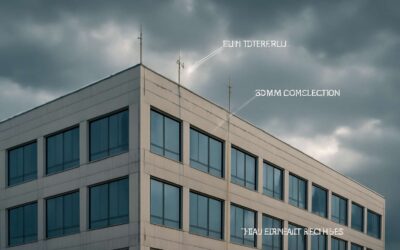
Across South Africa’s dramatic skies, lightning protection stands as a quiet steward of safety and calm. I watch air terminals as focal points, inviting the bolt to a safe corridor rather than a brittle rooftop. The placement is strategic—topmost, unobstructed eaves and ridgelines—while conductors thread the building like a copper ribbon, guiding current down to a reinforced earth. This careful choreography underpins effective lightning protection, letting storms pass with less fear and less collateral damage.
Key roles unfold in plain terms, and I see them clearly:
- Air terminals offer a preferred strike point, guiding energy gracefully toward safety.
- Conductors provide a low-impedance path, distributing current to earth with minimal resistance.
- System layout on ridges, spires, and turrets helps safeguard larger structures.
The poetry of protection is practical, and when drawn with care, it invites resilience without drama, even in South Africa’s thunderstorm seasons!
Grounding and bonding fundamentals
South Africa’s skies crackle with real drama; a single lightning bolt can carry tens of thousands of amps and still miss the mark if the protection plan is lazy. The right grounding and bonding framework keeps the drama outside where it belongs, delivering effective lightning protection with quiet efficiency.
Grounding fundamentals boil down to two ideas: a low-impedance path for fault currents and a stable reference for all metalwork. Bonding ties together structural steel, plumbing, and electrical systems so a surge spreads harmlessly rather than sparking chaos.
- Low impedance path to earth that keeps voltages in check
- Dedicated bonding between metalwork and utilities to equalize potentials
- Robust earth electrodes and corrosion-resistant conductors for lasting performance
Together, these elements form the spine of reliable lightning protection, delivering predictable performance during SA’s thunder seasons—less downtime, less collateral damage, more peace of mind.
Surge protection devices integration
In bustling SA environments, the right shield against sudden strikes is not a rumor—it’s a system. Key components and their roles in surge protection are the unseen reliability behind every outage-free day. Surge protection devices (SPDs) sit at the chokepoints where power enters, acting as fast-acting sentinels to clamp excess voltage and stop damage at the source. This is a core piece of lightning protection that keeps critical equipment stable even during fierce storms.
Key components and their roles include:
- Surge protection devices (SPDs) and coordinated timing with main switchboards
- Protective relays and monitoring that flag faults before they cascade
- Properly rated conductors and enclosure hardware for durable, South African conditions
- Diagnostics and testing routines to prove readiness between thunder seasons
When SPDs are integrated with building management and electrical layouts, downtime drops and resilience rises. It’s about precision, not luck. Lightning protection relies on smart SPD integration to guard both revenue and reputation!
Design Strategies for Different Structures
Residential vs commercial design requirements
Storms choreograph chaos on every rooftop, and in South Africa those lines sing with dramatic clarity. ‘Protection is not an expense; it’s a shield against the storm’s theatre,’ a veteran engineer once reminded us. Design strategies must respect homes and busy facilities alike.
Residential and commercial projects share the duty of lightning protection, but their choreography differs.
- Architectural integration that preserves curb appeal
- Maintenance access without disrupting daily use
- Scalable resilience for growing facilities
Across South Africa, climate and codes shape these choices, letting designers weave protection into the skyline without shouting about it. The result is a durable, elegant shield that supports life and work through thunder and calm alike.
Rural, urban, and high-rise considerations
Protection is not an expense; it’s a shield against the storm’s theatre, and in South Africa our skylines bear witness. Design strategies for rural, urban, and high‑rise structures weave resilience into lightning protection, granting safety without sacrificing silhouette or function.
- Rural: rugged layouts, simple routing, easy maintenance
- Urban: compact footprints, discreet cabling, integrated façades
- High-rise: wind exposure, vibration control, curtain-wall compatibility
Across SA, codes guide placement, grounding, and inspection patrols, letting the shield become a quiet guardian that fits with life and industry rather than dominating it.
Material choices and corrosion resistance
Design strategies for different structures must weave durability and discretion into the fabric of lightning protection. Across SA’s varied climates—from salt-laced coastlines to arid inland plains—material choices determine how storms are tamed and how quietly the system endures. The aim is a shield that stands through time without marring silhouette or function; that patience is the heart of lightning protection longevity in SA’s conditions.
Material selection is not cosmetic; it’s the corrosion counterspell that keeps the current flowing unimpeded. These durable options bolster lightning protection across SA environments:
- Copper conductors with protective jackets for coastal zones
- Stainless steel or aluminium alloys with robust coatings for exposed structures
- Epoxy or zinc-rich primers and polymeric jackets to seal against salt and humidity
Conductor routing and protection zones
lightning protection isn’t merely a cosmetic feature—it’s the silent guardian of durability. In South Africa’s capricious climate, it must be designed with precision, because a single bolt can rewrite a roof’s diary in moments, so conductor routing matters.
Design strategies vary by structure. For tall, exposed towers, run conductors along ridges in shielded channels and carve clear protection zones around penetrations; for low-profile commercial blocks, tuck runs into fascia or internal conduits to keep the silhouette clean.
- Keep routes short and straight with minimal joints
- Prefer concealed or armored conduits in exposed zones
- Segment protection zones around openings, skylights, and vents
- Isolate sensitive equipment inside protected volumes
A thoughtful layout balances stealth and keeps the system breathing with the building rather than shouting at the skyline.
Building envelope and roof-edge detailing
South Africa’s thunderhead summers remind me that architecture is a dialogue with weather. Design strategies adjust to the shape of the building: tall, exposed towers demand confidence on the ridge; low-profile blocks demand restraint at fascia and eaves. The envelope and roof-edge detailing become a language of durability.
lighting protection isn’t a flourish; it’s a framework for resilience. For taller structures, routes prefer short, direct paths along protected ridges and around penetrations; for low-profile blocks, runs tuck into fascia or internal conduits, keeping the silhouette clean.
- Protected ridge routing along shielded channels
- Concealed runs in fascia or internal conduits for a clean silhouette
- Segmented protection zones around openings and penetrations
In the end, a thoughtful layout balances stealth and the building’s breath, letting protection guard the roofline as a quiet guardian rather than a loud impression.
Maintenance, Testing, and Standards Compliance
Inspection schedules and checklists
A single bolt can carry up to 200,000 amperes—enough to power a small city for a moment. In the theatre of South Africa’s skies, lightning protection is the quiet, patient guardian of roofs and rooms, ensuring resilience when the storm comes.
Maintenance is the heartbeat. Regular visual checks, corrosion patrols, and secure connections preserve the system’s integrity and readiness. A simple, steady cadence keeps defects from becoming disasters.
- Visual integrity of air terminals and conductors
- Corrosion checks on all exposed metals
- Bonding of structural steel to the grounding system
- Documentation of past inspections and repairs
Testing and standards compliance guide lightning protection program: Schedule and checklists ensure accountability. Quarterly visual reviews, semi-annual function tests of surge protection devices, and annual system evaluations anchor safety to code and to the field.
Testing methods for grounding systems
Storms press hard on roofs, but a well-tended grounding system stands unseen, calm under pressure. “Protection is not a luxury, it’s a habit,” a veteran electrician reminds us, and maintenance is the heartbeat that keeps that habit reliable.
Maintenance keeps bonds tight and readiness high. Visual checks, secure terminations, and ongoing corrosion patrols head off trouble before it strikes.
- Continuity tests across bonding paths
- Earth resistance measurements at main and auxiliary electrodes
- Functional checks of surge protection devices
- Soil resistivity and moisture monitoring to assess ground effectiveness
Standards compliance links every action to credible criteria; thorough documentation and independent audits keep lightning protection aligned with South African and international best practice.
Documentation and record-keeping
“Protection is not a luxury, it’s a habit,” a veteran electrician reminds us. In South Africa’s storm seasons, maintenance is the heartbeat of lightning protection, keeping the system calm under pressure even when skies roar. A disciplined program guards connections, grounds, and surge paths, turning risk into routine and risk management into quiet confidence.
Testing is the proof we keep in the bank—ongoing checks that the protection remains ready. Clear records prove performance, and a culture of audit-ready documentation supports every decision. We value the integrity of the gear and the clarity of the data, because visibility saves assets and lives.
- Existing condition and service reports
- Functional testing certificates
- Independent audit summaries
Standards compliance ties every action to credible criteria; thorough documentation and independent audits keep lightning protection aligned with South African and international best practice. The record-keeping becomes a living history—who did what, when, and why—supporting future upgrades and accountability.
Standards and regulatory requirements overview
Maintenance isn’t an afterthought; it’s the heartbeat of reliable lightning protection. Routine visual inspections, corrosion control, and component-life planning keep the system resilient through long storm seasons. A disciplined program guards connections, grounds, and surge paths, turning risk into routine and fear into quiet confidence.
- Routine visual inspections
- Corrosion control and protective coatings
- Component-life planning and spares management
Testing is the ongoing evidence that the shield remains ready. Functional checks, ground resistance measurements, and surge-protection verification should be recorded and auditable—because visible data saves assets and lives. In practice, lightning protection thrives on documented proof rather than wishful thinking.
Standards compliance ties every action to credible criteria. The regulatory overview anchors design and maintenance to the IEC 62305 family (and local SANS adoption), with independent audits ensuring integrity. Documentation becomes the living history of decisions and upgrades.



0 Comments