Foundations of lightning protection levels
Defining lightning protection level and why it matters
Lightning is a force that treats you like a surprise party you didn’t RSVP for—fast, bright, and a bit unruly. In South Africa, our skies crackle with frequent storms, so a robust protection strategy isn’t optional. what is lightning protection level? It’s the yardstick that defines how strong the defensive system must be to withstand a typical strike and keep people and assets safe.
Foundations of lightning protection levels rest on three pillars: exposure, occupancy, and risk tolerance. Defining lightning protection level means matching the system to the threat, not chasing fanciful standards.
- Exposure: how often and how intensely a site is struck
- Occupancy: people and sensitive equipment present
- Risk tolerance: acceptable downtime and financial impact
When these basics align with real-world conditions, protection becomes efficient, not ostentatious. The design translates into conductors, surge devices, and grounding schemes ready for South Africa’s storm seasons.
Historical development and standards overview
Storms lash the South African veld with unwelcome theatre, and the answer lies in what is lightning protection level—a measure of how a building wears its shield against nature’s glare. From cathedral spires to suburban roofs, the arc of safety is drawn by history and careful craft. Foundations of protection are not whimsy; they rise from how a site meets the storm’s relentless tempo.
Historically, protection advanced from crude lightning rods to a disciplined framework. The modern backbone lives in the IEC 62305 family, with local renditions aligned to South African codes and the realities of our storm seasons.
- Early experiments that shaped basic concepts
- IEC 62305 as a unified protective framework
- South African adaptations for local climate
In practice, the history guides the design of threat-aware protection—ensuring conductors, surge devices, and grounding schemes sit confidently against South Africa’s tempests.
Key concepts and terminology
Foundations of protection are not whimsical scaffolds but a living language that weather writes into brick and wire. When we ask what is lightning protection level, we glimpse a design ethic that scales safety with risk—from modest eaves to cathedral spires—ensuring the shield remains unbroken when the storm writes its verdict on a building.
Core concepts and terminology unlock the map: LPL I to IV mark escalating protection; down conductors and air terminals become the spine; bonding keeps metallic parts at the same electrical potential; grounding dissipates the surge; surge protective devices curb residual voltages.
- Down conductors and air terminals
- Bonding and equipotential connections
- Surge protective devices (SPDs)
In the South African climate, these foundations translate into site-specific layouts, where I watch the shield take shape—bold, practical, and ready to face the next storm!
How lightning protection levels are specified
International and national standards overview
A single bolt can carry up to 100 million volts and thousands of amperes, a dramatic reminder that risk is only tamed by precision. So what is lightning protection level? It’s the measured language standards use to tie protection to a structure’s risk and use. International guidance translates storm strength into concrete criteria, guiding plans from towers to homes with a quiet, unwavering cadence.
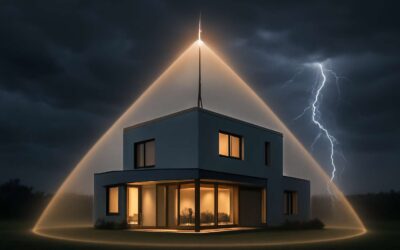
Across borders, protection levels are specified by performance criteria embedded in IEC 62305, with local amendments shaping implementation in South Africa. The aim is to tie a structure’s risk profile to a corresponding level, balancing cost with resilience. The following elements commonly drive the assignment of levels:
- Impact category and occupancy risk
- Impulse and surge withstand criteria
- Documentation, inspection, and compliance
For practitioners, this question—what is lightning protection level—frames every design decision.
High-level definitions: protection levels vs. design levels
Storms race across the Highveld with relentless speed, and a single bolt can redraw a day in an instant. A crucial question, what is lightning protection level, anchors this discussion. In South Africa, protection levels translate risk into design through IEC 62305, refined by local amendments to fit our climate, our towns, and our towers.
High-level definitions separate protection levels from design levels that guide engineers. Protection levels describe required safety, while design levels convert that safety into concrete performance criteria—impulse tolerance, surge resistance, and the validation trail of documentation and inspection.
- Risk- and occupancy-based criteria
- Impulse and surge withstand targets
- Documentation and ongoing compliance
This pairing anchors decisions across schemes, from tall towers to grounded facilities, shaping resilience with quiet confidence.
Material and structural considerations in rating
What is lightning protection level? It’s the point where risk tolerance meets design reality—material choices, structural interfaces, and the way a building behaves under a strike. In South Africa, these decisions align with IEC 62305 plus local amendments, translating safety into tangible performance criteria.
Material and structural considerations anchor the rating, ensuring the system fits the edifice and climate. The specification weighs how conductors, air terminals, and connectors stand up to local corrosion, UV exposure, and temperature swings, while integrating with the building’s framework and envelope—steel, concrete, or tiled roofs alike.
- Materials and components: corrosion-resistant conductors, robust connections, and durable fasteners
- Structural integration: bonding to frames, roofs, and foundations without compromising the design
- Manufacture and workmanship: galvanization, coatings, and installation quality to endure SA conditions
- Lifecycle resilience: anticipated maintenance and inspection considerations woven into the rating
These facets collectively shape the protective performance the design promises, aligning engineering intent with the realities of South African sites.
Types of lightning protection level ratings (LPL, IEC/UL equivalents)
Storm season costs South African property owners millions every year, and the question what is lightning protection level frames the answer. It’s the lens where safety becomes measurable performance, deciding how a structure acts under a strike and how it returns to quiet afterward.
Lightning protection levels are specified through internationally recognized schemes. Here are the common types and their equivalents:
- IEC-based LPL I–IV external protection levels (the core framework)
- UL equivalents used in the US and other markets (aligned with IEC where possible)
- Design-level relationships that translate to maintenance and inspection expectations
These ratings guide conductor sizing, bonding, and redundancy, ensuring the building envelope and frame cooperate under surge.
Calculating and evaluating lightning protection levels
Guidelines for site assessment and risk analysis
Across South Africa, thunderheads roll like drumbeats, and the question of what is lightning protection level becomes more than theory—it is a shield for lives, property, and productivity.
Calculating and evaluating these levels begins with site assessment and risk analysis. We weigh exposure, building use, and critical assets against historical storm patterns to map protection needs and resilience.
- Site exposure to open horizons and wind shear
- Structure type, height, and material behavior
- Critical assets and occupancy patterns
- Historical thunderstorm frequency and seasonality
Guidelines for assessment translate into design thinking that aligns protection levels with risk envelopes, all while respecting local codes, craftsmanship, and future growth.
Choosing protection level based on building type and use
Across South Africa’s storm-prone skies, calculating and evaluating lightning protection levels is a practical discipline. So, what is lightning protection level? It’s a risk-based design language that translates exposure into resilience, shaping the protection envelope around people, property, and productivity.
- Building type and occupancy profile influence the level of protection deemed appropriate.
- Critical assets and business continuity concerns push the design toward redundancy and fault tolerance.
- Regional storm history and local climate patterns help calibrate the exposure the structure must endure.
- Compliance with local codes and craftsmanship standards aligns protection with the broader risk management strategy.
Ultimately, protection levels mirror the building’s class and use, steering decisions without dictating a one-size-fits-all solution.
Common calculation methods and software tools
In practice, calculating and evaluating lightning protection levels is a measured dance with numbers and risk, even under South Africa’s storm-swept skies. what is lightning protection level? It’s the design language that converts exposure—storm frequency, wind, hail, and building geometry—into a protective envelope around people and assets.
Common calculation methods include risk-based exposure analysis and strike-distance modeling, supported by peak current assumptions aligned with regional weather data. Software tools range from specialized lightning protection modules within drawing suites to standalone risk-analysis programs, all aiming to map the envelope with clarity.
- Exposure and risk assessment frameworks
- Strike-distance and current probability models
- Consequence-based design tied to occupancy and asset value
Impact of geography and climate on level selection
South Africa’s thunder seasons turn rooftops into weathered maps, and determining protection levels becomes a living quest. what is lightning protection level? It’s the design language that translates exposure—storm frequency, wind, hail, and building geometry—into a protective envelope around people and assets.
- Coastline exposure and salt erosion considerations
- Altitude and terrain influencing strike density
- Local climate patterns: seasonal storms and hail frequency
- Building type, occupancy, and asset value shaping risk thresholds
Calculating in SA means aligning local meteorological data with risk-analysis models and strike-distance concepts. The geography and climate push level selection toward tailored envelopes for coastal cities, highveld towns, and inland plains alike.
Role of test results and certification in verification
Calculating and evaluating lightning protection levels translates exposure into a protective envelope around people and property. The process blends local climate data, building use, and test results to determine what is needed. The question what is lightning protection level sits at the nexus of risk and resilience.
Verification rests on a practical chorus of tests and certifications. The role of test results and certification in verification is to prove performance under real impulses and document compliance for audits.
- Impulse and continuity testing of air-termination systems
- Bonding path resistance and electrical continuity checks
- Validation of protective envelope against expected strike density
- Documentation and third-party certification records
For South Africa, certification by local bodies or recognized schemes offers confidence to tenants and inspectors alike. When test results align with design assumptions, the chosen protection level proves robust against the next squall.
Practical applications and case studies
Residential buildings and small facilities
South Africa’s storms pack a punch: a single lightning bolt can carry up to 1 billion joules of energy, enough to damage roofs and electrical gear. In this context, what is lightning protection level becomes a practical question for homeowners and small facilities. A clear rating guides design choices, risk decisions, and how a building performs when the sky darkens.
Residential buildings and small facilities in SA rely on practical protection schemes. The goal is to guard roofs, gutters, and service penetrations from direct strikes and induced surges. Real-world cases show how modest upgrades—bonding, conductors, and properly placed air terminals—reduce outages and fire risk while speeding recovery after storms.
- Single-family homes retrofit with clearly routed conductors and surge protection
- Small workshops or factories with metal roofs and down-conductors
- Community facilities such as clinics and schools upgraded to meet local standards
These practical applications illustrate how a residential scale protection level translates into tangible safety and continuity for South African communities.
Industrial facilities and critical infrastructure
Thunder cracks along South Africa’s industrial spine, and the question what is lightning protection level suddenly matters beyond theory. For factories, data centers, and substations, a practical rating guides design choices, risk decisions, and readiness when the sky darkens. It determines how bonds are laid, how conductors run, and where air terminals stand to tame the storm’s appetite.
- Industrial facilities with metal roofs and long down-conductors
- Critical infrastructure such as data centers and hospitals
- Power utilities and transmission hubs requiring surge control
Across SA, practical case studies show how targeted upgrades translate into uptime and safety. what is lightning protection level guiding these outcomes becomes a lantern in the night for engineers and managers alike.
Historical buildings and heritage sites
In South Africa’s wind-beaten horizons, a single strike can rewrite a century of weathered stone. what is lightning protection level becomes a practical compass for heritage contexts, guiding hidden copper and steel along ivy-clad roofs and spires while the sky crowds in.
For historic buildings, practical applications include discreet conductors snaking along parapets, roof-edge air terminals tucked behind gargoyles, and protective bonds that preserve the patina of time while quelling stray bolts.
Across SA, case studies from churches, museums, and government precincts show upgrades translating into longer lifespans and safer spaces for visitors.
- Cathedrals and heritage churches
- Museums and colonial-era public buildings
- Historic houses and palaces
These guardians remind us that protection is as much about memory as metal.
Retrofits and upgrades for existing structures
Practical retrofits for existing heritage structures in South Africa hinge on a stubborn fact: elegance should not invite risk. What is lightning protection level in practical terms? It’s the calibrated safety standard that shapes discreet conductors, roof-edge devices, and protective bonds—allowing ivy-clad spires to keep their charm while stray bolts stay politely outside the history books.
- Discreet routing of conductors along parapets and cornices
- Roof-edge air terminals tucked behind gargoyles or decorative features
- Protective bonds linking masonry, metalwork, and structural elements
- Non-invasive earth electrodes and remote monitoring for peace of mind
- Conservation approvals integrated into the retrofit plan
Across South Africa, churches, museums, and government precincts showcase how retrofits extend lifespans and improve visitor safety without sacrificing character. The resulting installations read like quiet partnerships between stone and steel—a practical testament to what is lightning protection level when respect for heritage and science walk hand in hand.

0 Comments