Understanding Lightning Protection in Victoria
Key risks and why Victorian properties need protection
Storm season in Victoria delivers hundreds of lightning strikes every year, enough to make a roof uneasy. If you’re reading from South Africa, you know the drill—thunder doesn’t RSVP, it crashes the party. This isn’t bravado; it’s a practical concern for property safety.
Key risks range from electrical surges that fry appliances and data gear to fires sparked by a struck roof or guttering. Victorian homes, with chimneys and timber framing, can invite the arc to do more than make a spark.
- Electrical surges that fry appliances and data gear
- Fire risk from struck gutters and roof penetrations
- Structural damage from repeated arcing into framing
That’s why lightning protection victoria matters for keeping lights on, preserving property value, and making insurance claims less dramatic.
How lightning protection systems work for homes and businesses
Hundreds of strikes weave through Victoria’s skies each year, turning quiet suburbs into questions of safety. Understanding lightning protection victoria is less about bravado and more about a plan—channeling electrical fury away from people, pets, and property.
A well-designed system behaves like a quiet sentinel, guiding energy exactly where it should go as storms march across the plain. It relies on a few simple ideas rather than magic: Even here in South Africa, these principles translate to any storm-prone roof.
- Air terminals (lightning rods) positioned to intercept strikes
- Down conductors that carry current from the strike to the ground
- Ground system with electrodes that dissipate energy safely
- Surge protection devices at key electrical and data entry points
For homes and businesses, this fusion of design and protection means continuity—lights stay on, electronics survive, and the storm moves on.
Common myths about lightning risk in Victoria
In Victoria’s wild skies, a single bolt can light up a paddock in an instant—tens to hundreds of millions of volts racing toward the ground. Understanding lightning protection victoria is not about bravado but about planning with the land in mind; a quiet system can shield homes and livelihoods from sudden fury. Here in South Africa, these principles translate to any storm-prone roof. I’ve stood beside a farmer as rain lands like a sheet, and I’ve seen how calm protection lets life carry on afterward.
Common myths about lightning risk in Victoria persist, yet they crumble under steady observation:
- Myth: storms near fields are harmless indoors.
- Myth: only tall structures invite strikes.
- Myth: protection is a luxury, not a necessity.
Reality favors preparedness, not bravado—a lesson heard from rural families who’ve weathered storms and kept essential lines alive thanks to thoughtful protection.
Standards, Codes and Compliance in Victoria
Australian standards and Victoria-specific requirements
Standards illuminate the path for lightning protection victoria, weaving through AS/NZS 1768, which details air terminals, down conductors, bonding, and clearances. The NCC and Victoria’s Building Act provide the legal architecture that governs installation, testing, and safe integration with existing structures. Compliance is not optional—licenced electricians and the Victorian Building Authority ensure every job is properly documented and inspected.
Victoria-specific requirements layer on maintenance, records, and ongoing audits under the Electrical Safety Act and WorkSafe Victoria guidelines. In this realm, a system isn’t merely installed; it is validated with periodic testing and clear traceability, so storms don’t rewrite the story of a home or business.
- Licensed professionals and permits required (VBA)
- AS/NZS 1768 compliance and NCC alignment
- Regular maintenance and documentation
Compliance checklists for Victorian properties
A bolt can carry up to a billion volts, and a building’s fate can hinge on how well its protection is baked into the fabric. Standards illuminate the path for lightning protection victoria, guiding every installation from air terminals to down conductors and bonding. The NCC and Victoria’s Building Act frame when and how testing happens, and licensed electricians backed by the Victorian Building Authority ensure the paperwork matches the performance.
Compliance touchpoints include:
- Licensed professionals and permits required (VBA)
- AS/NZS 1768 compliance and NCC alignment
- Regular maintenance and documentation
Beyond installation, Victoria requires maintenance, meticulous records, and periodic audits under the Electrical Safety Act and WorkSafe Victoria guidelines. For readers accustomed to rigorous compliance, this approach mirrors the familiar push for auditable records—the heartbeat of lightning protection victoria.
Inspection, certification and ongoing maintenance in Victoria
Storms are merciless auditors of a building’s soul; in Victoria, standards act like a spine you can’t see but must feel when the air charges. lightning protection victoria isn’t merely installation; it’s a compliance tapestry tying workmanship to performance, with the NCC, AS/NZS 1768, and Victorian Building Authority oversight guiding every test and seal.
Inspections, certification, and ongoing maintenance are codified under the Electrical Safety Act and WorkSafe Victoria, ensuring records travel with the system from installation to every audit. A licensed electrician, backed by VBA, validates that the installation meets the spec, then keeps auditable documents that future assessors trust. For South Africa readers, the emphasis on auditable records mirrors a familiar compliance culture.
The cadence is simple, but essential:
- Periodic inspections by licensed professionals
- Formal certification aligned to Victoria standards
- Comprehensive maintenance records and audits
Choosing a licensed contractor for Victorian projects
Storms are not merely weather; they are judges weighing the bones of a building. lightning protection victoria is not just hardware; it is a covenant between risk and resilience, written into every bolt, every bond, every certificate. Standards act as a spine you feel when the air charges.
Standards, Codes and Compliance anchor every Victorian project. The NCC, AS/NZS 1768, and oversight by the Victorian Building Authority shape testing, installation and documentation. An Electrical Safety Act framework with WorkSafe Victoria ensures auditable records travel with the system from installation to audits, while a licensed electrician, backed by VBA, validates the work and preserves seals for future verification.
Choosing a licensed contractor for Victorian projects means seeking more than a price tag; it means partnering with someone who respects that compliance tapestry. For South Africa readers, the auditable record culture mirrors familiar regulatory discipline.
- Licence and registration with the VBA
- Proof of insurance and ability to provide auditable records
- Demonstrable alignment with Electrical Safety Act and Victoria’s standards
That alignment keeps the sky from rewriting the story of your building.
Residential Lightning Protection in Victoria
System components: roof mounts, air terminals, down conductors and grounding
The average bolt drags a thunderous entrance—30,000 amperes and heat hotter than the sun, and your roof is the stage. Residential lightning protection in Victoria hinges on four sturdy players who work in harmony rather than as lone gunslingers: roof mounts, air terminals, down conductors and grounding. For true lightning protection victoria, precision and placement beat bravado any day.
- Roof mounts: secure the system to the tile or metal roof without compromising the roofline.
- Air terminals: the “point men” that intercept the strike and steer it away from live assets.
- Down conductors: race the current from the interceptors down to earth with minimal impedance.
- Grounding: a robust, moist-soil path that dissipates energy safely into the ground.
When these work in concert, you avoid drama, protect electronics, and keep the family room safe from the unintended spark show.
Coastal versus inland risk profiles in Victoria
Victoria’s coastline is a magnet for dramatic electrical skies, with annual storm activity that often outruns inland neighbours. For residential lightning protection victoria, coastal properties face a different rhythm of strikes and corrosion risk, shaping how systems are designed. Salt-laden air and higher humidity demand materials that resist pitting and fatigue.
- Coastal humidity and salt exposure accelerate corrosion and degrade fasteners.
- Inland sites can see more aggressive interior storms with higher peak currents.
- Soil moisture and conductivity vary, influencing grounding strategies.
Ultimately, a Victoria-specific approach accounts for climate, soil, and exposure. Whether coastal or inland, the aim remains to reliably intercept and dissipate energy, protecting wiring, appliances, and family spaces. lightning protection victoria is about tailoring protection to place as much as it is about technology.
Maintenance schedules and professional inspections in Victoria
“You protect what you can’t replace,” a storm watcher once told me, and in Victoria that truth lands hardest after a thunderstorm season. For many homeowners, lightning protection victoria is the quiet shield behind every safe switchboard and intact appliance.
Residential maintenance schedules should be regular, with coastal homes leaning toward annual checks and inland properties spaced a little wider—yet never skipping professional inspections that verify the integrity of roof mounts, down conductors, and grounding paths. A seasoned technician looks for corrosion, loose fasteners, and hidden damage that storms love to hide. Even South African readers will recognise the value of a regular check.
- External hardware and mounting integrity
- Conductor continuity and grounding path checks
- Inspection findings and recommended intervals
In Victoria, professional inspections keep the home’s heart beating through every storm.
Commercial and Industrial Lightning Protection in Victoria
System design considerations for large facilities
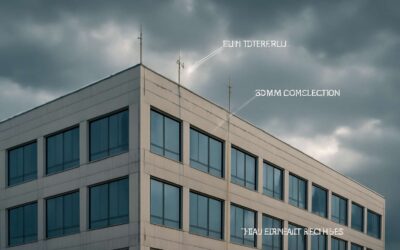
A typical lightning bolt carries around 1 gigajoule of energy—enough to illuminate a city block or power an office for several hours. For Victoria’s commercial and industrial sectors, lightning protection victoria is a boardroom issue, not a beauty decision. System design for large facilities must balance reliability, cost, and safety, ensuring critical operations stay online when storms pass over a city skyline or a remote inland plant hums with machinery.
Key design considerations for large facilities include forming robust protection paths, accommodating long run-down conductors, and coordinating with electrical, fire, and data systems. Coastal sites demand corrosion resistance; inland sites require attention to soil resistivity and grounding adequacy. The following factors shape layout:
- Protection zoning aligned with critical loads
- Redundancy in air terminals and conductors
- Interface with backup power and data integrity
- Maintenance accessibility and inspection cycles
In Victoria, a well‑considered installation blends engineering rigor with practical site realities, offering reassurance to managers in South Africa eyeing cross‑border expansion.
Risk assessment, insurance implications and compliance in Victoria
One thunderclap can deliver enough energy to power a small block for minutes, a stark reminder of what a storm can do! In Victoria, commercial and industrial footprints hinge on risk, cost, and uptime. lightning protection victoria is not a cosmetic flourish; it’s strategic governance that informs boardroom decisions and insurance conversations.
Risk assessment for large facilities translates into insurance implications and compliance maps. Meticulous hazard analysis around critical loads, protection zoning, and documented maintenance histories become the currency insurers seek and regulators require. Though upgrades demand capital, the dividend is steadier premiums and fewer outages during storms that sweep the skyline. In Victoria, adherence to standards and site realities shapes coverage and regulatory reassurance. For South African managers eyeing cross-border expansion, that reassurance is priceless.
- Hazard analysis aligned to critical loads
- Protection zoning and documentation for insurers
- Site-specific compliance and audit readiness
Emergency response planning and testing procedures in Victorian facilities
A single bolt can unleash the energy of a small block, enough to dim a factory floor for minutes. In Victoria, commercial and industrial sites rely on urgent emergency response planning and tested procedures to ride out the thunder—this is where lightning protection victoria becomes a backbone of risk governance and insurance conversations. For South African managers eyeing cross-border expansion, that reassurance is priceless.
Emergency response planning in Victorian facilities hinges on clear roles, rapid communication, and practiced drills. Testing procedures cover system integrity, rapid fault isolation, and post-event debriefs, ensuring documented readiness for insurers and regulators and a quiet, steady hum beneath the storm.
- Independent functional testing of components and connections
- Documentation and audit readiness for insurers
- Post-storm incident review and record-keeping
When these elements align, Victorian facilities breathe easier as storms roll across the skyline.
Case studies: successful installations in Victoria
Thunderheads over Victoria remind us that a single bolt can pulse through a roof, momentarily dimming a factory floor. lightning protection victoria is a steadfast shield, guiding risk and reassuring insurers.
Here are concise snapshots from successful Victorian installations:
- Geelong high-tech facility upgraded with corrosion-resistant down conductors and roof-mounted air terminals, keeping clean rooms resilient during coastal storms.
- Melbourne logistics hub uses a hybrid roof-mount path and rapid fault isolation, preserving production lines even as winds lash the skyline.
For South African managers eyeing cross-border expansion, these Victoria cases offer a blueprint for balancing reliability with cost insights. The stories travel well, boosting insurer confidence and stakeholder trust.
Under the storm, these projects stand as quiet sentinels.



0 Comments